
EURUSD
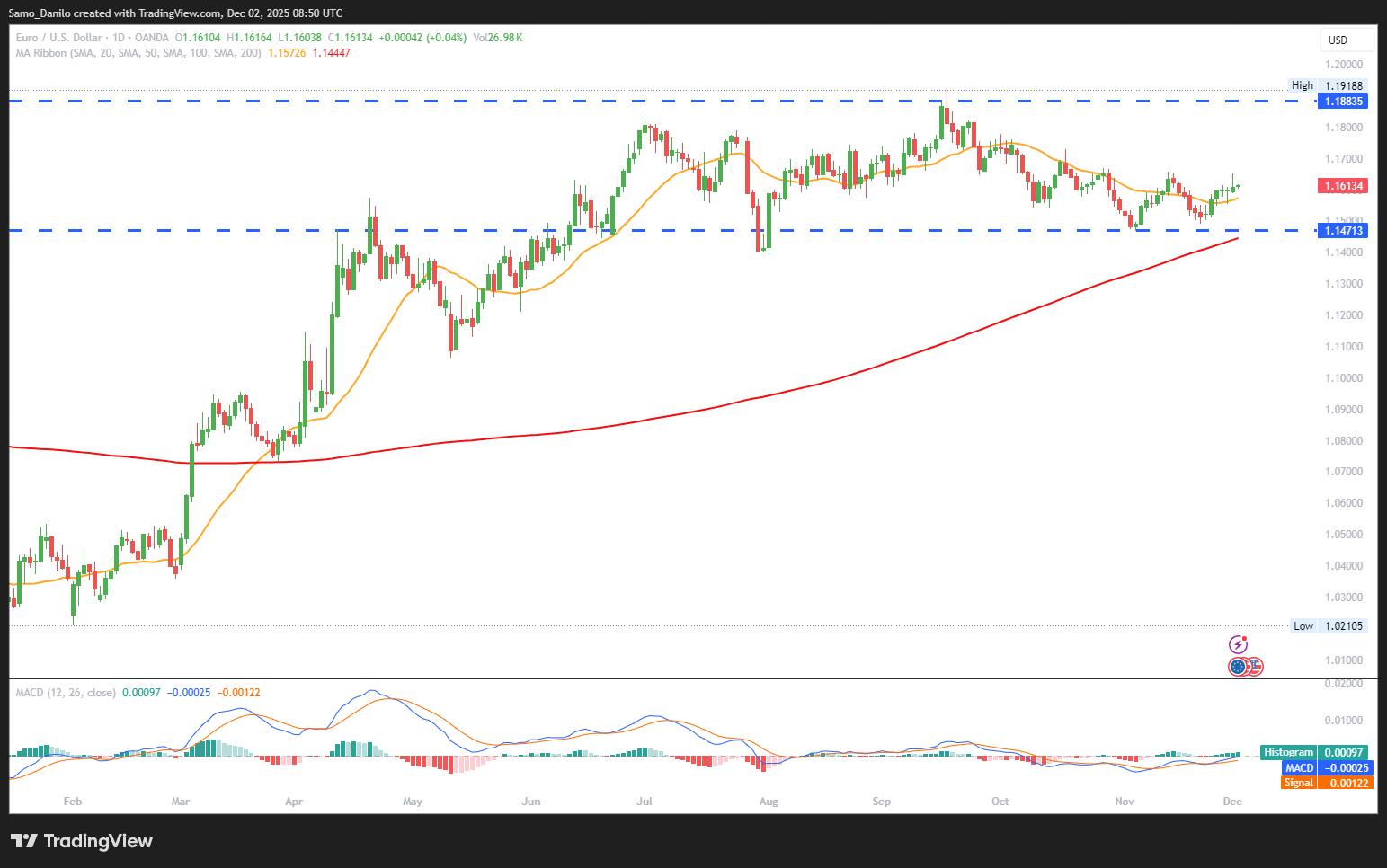
- EUR/USD Price: The euro strengthens during Tuesday’s European session, pushing the pair toward 1.1615. The momentum reflects improving sentiment around the Eurozone and a softer US dollar backdrop.
- Eurozone inflation: Fresh inflation prints from France, Spain, and Italy show no signs of immediate price pressures. This reinforces expectations that the ECB will maintain its current stance without rushing to adjust interest rates.
- ECB signals: President Lagarde reaffirmed that borrowing costs are at appropriate levels. Similarly, Governing Council member Nagel expressed satisfaction with the existing monetary framework, reducing speculation of near-term shifts.
- Manufacturing PMI: Weaker-than-expected US PMI readings increase pressure on the Federal Reserve, weighing on the dollar. This supports EUR/USD’s upward move as markets reassess the trajectory of US economic momentum.
- Eurozone Data: Traders remain cautious ahead of preliminary HICP inflation numbers due later on Tuesday. The release is expected to guide short-term volatility and shape expectations for the ECB’s next steps.
| SMA (20) | Slightly Falling |  |
|
| RSI (14) | Rising |  | |
| MACD (12, 26, 9) | Slightly Rising | |
Closing statement: EUR/USD maintains a constructive tone, supported by soft US data and stable ECB messaging. A stronger-than-expected HICP print could add upward momentum, while a miss may limit gains in the near term.
GBPUSD
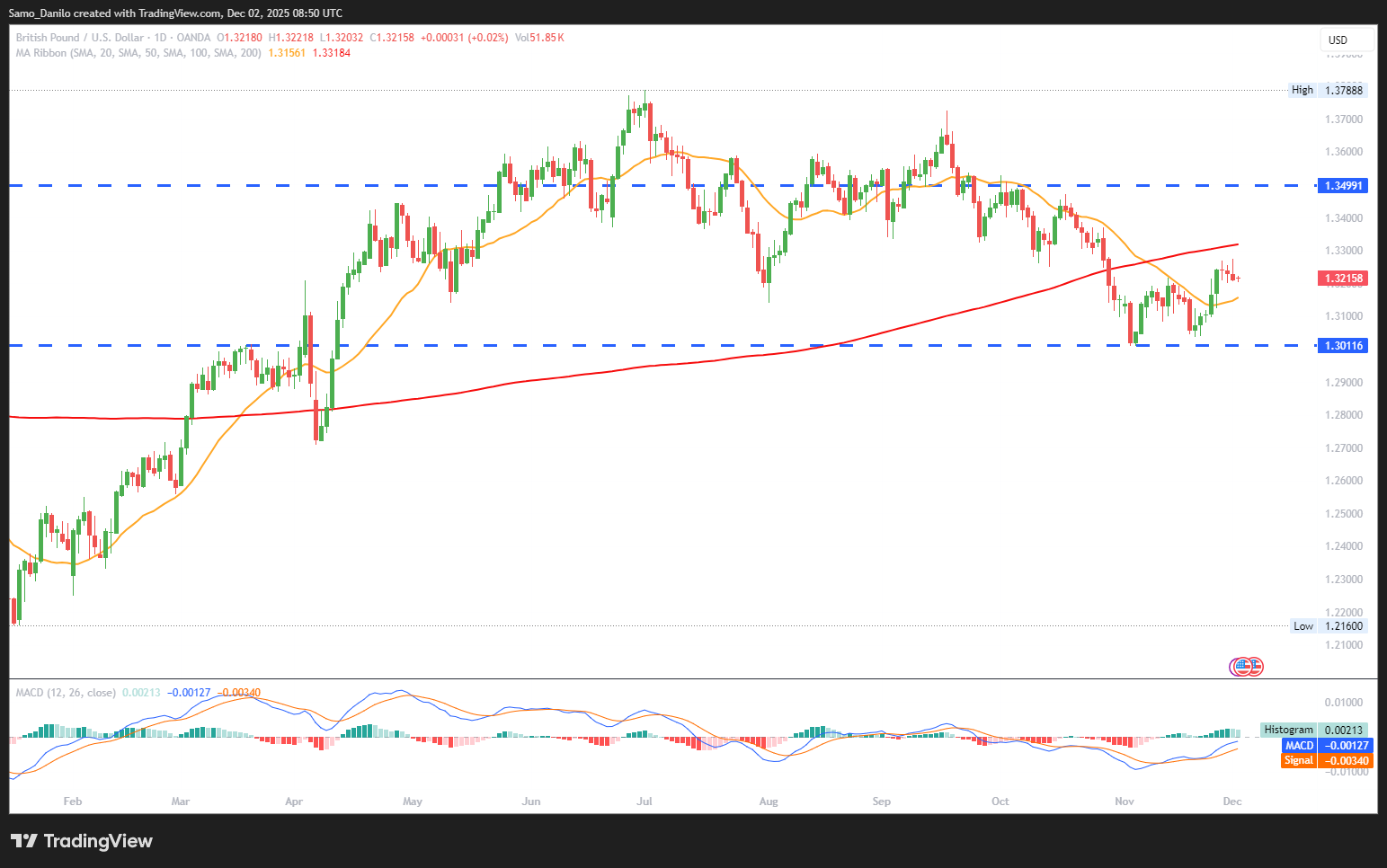
- GBP/USD Price: The pair is consolidating early Tuesday after retreating from five-week highs at 1.3276. Market participants appear cautious as momentum cools ahead of fresh catalysts.
- Pharmaceutical Tariff: Washington and London reached a zero-tariff agreement covering medicines and medical technology. However, the UK will pay higher prices for new US drugs and adjust its NICE valuation framework, introducing mixed implications for the broader economic outlook.
- BoE Rate: Analysts now see a strong probability that the Bank of England will reduce its policy rate to 3.75% this month. This dovish shift increases pressure on the Pound, limiting any sustainable upside in GBP/USD.
- US Manufacturing: The ISM Manufacturing PMI slipped to 48.2 in November, marking a ninth consecutive month of contraction. Softer US data restricts the dollar’s ability to extend gains, providing some support for the pair.
- Market Sentiment: Investors largely overlook the temporary fiscal boost from the UK Autumn Budget. With no major data releases on Tuesday, interest-rate expectations on both sides of the Atlantic remain the dominant drivers.
| SMA (20) | Falling | | |
| RSI (14) | Slightly Rising | |
|
| MACD (12, 26, 9) | Slightly Rising | |
Closing statement: GBP/USD may stay range-bound as traders weigh BoE rate-cut risks against weakening US data. A confirmed BoE policy shift could push the pair lower, while any further deterioration in US indicators may limit downside pressure.
XAUUSD
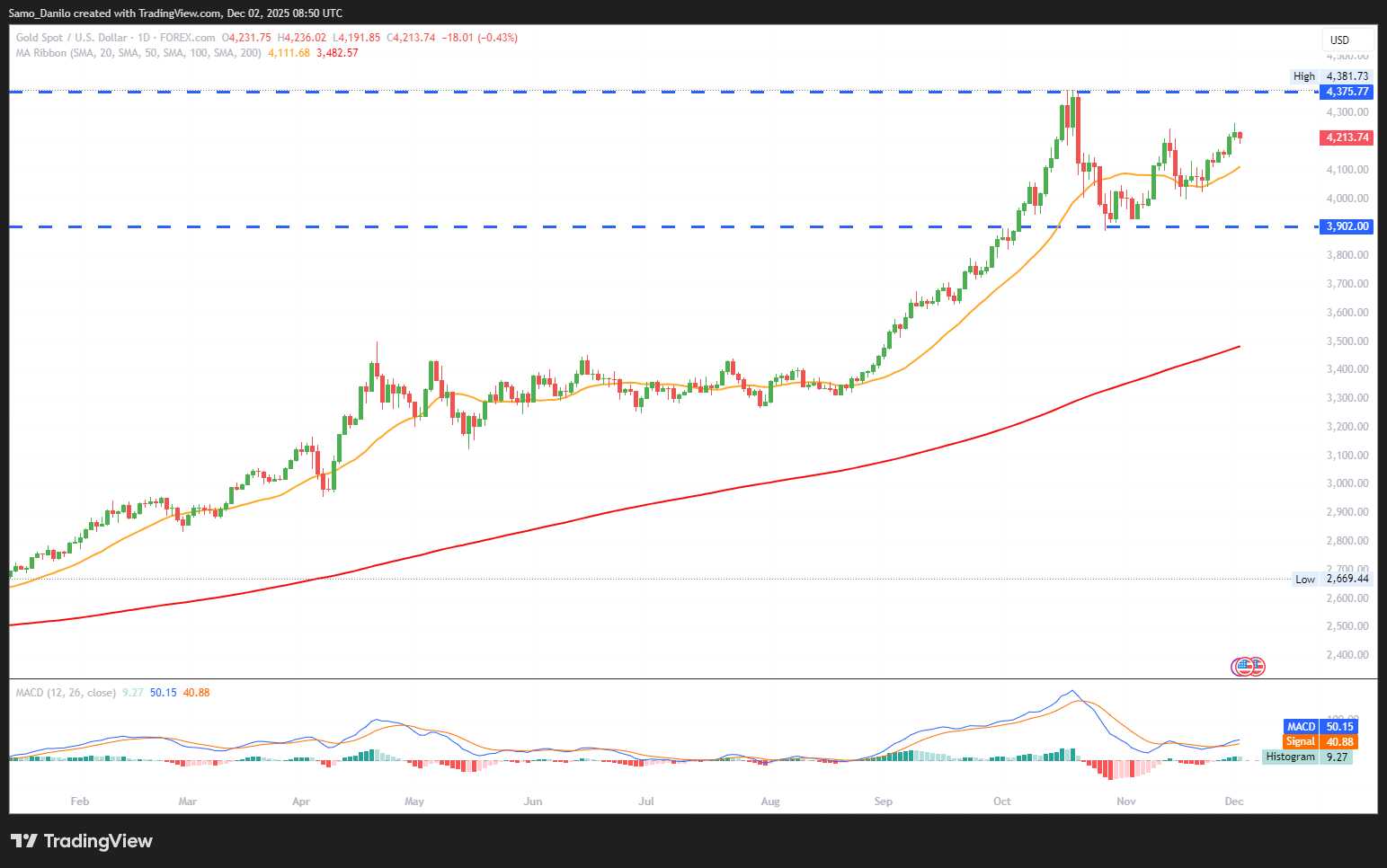
- XAU/USD Price: XAU/USD briefly fell below $4,200 during the Asian session but quickly recovered most losses. The metal continues to trade just under its strongest level since October 20, supported by underlying safe-haven demand.
- Geopolitical Uncertainty: Comments from US Secretary of State Marco Rubio emphasized that significant work remains to end the war, keeping geopolitical risks elevated. At the same time, President Zelensky’s push for additional European support highlights persistent regional instability—factors that typically support gold.
- US Data: Recent US releases showed the ninth consecutive monthly contraction in factory activity, alongside declining orders and falling employment. Signs of broadening economic weakness strengthen expectations for a more cautious Fed, which is generally favorable for gold.
- Consumer Data: Record-high Black Friday and strong Cyber Monday sales were driven largely by higher prices, as Americans purchased fewer goods but spent more. This dynamic fuels hopes that slowing economic momentum could ease inflationary pressure, indirectly supporting bullion.
- Upcoming Data: Investors now focus on upcoming releases including the ADP private-sector jobs report and the PCE Price Index. These indicators will help shape expectations for the Fed’s next steps and could introduce volatility into XAU/USD.
| SMA (20) | Slightly Rising | |
|
| RSI (14) | Rising | | |
| MACD (12, 26, 9) | Slightly Rising | |
Closing statement: Gold remains well supported by weak US data, geopolitical uncertainty, and anticipation of dovish Fed signals. Near-term price action will hinge on incoming US labor and inflation figures, with any downside surprises likely to push XAU/USD toward fresh highs.
CRUDE OIL
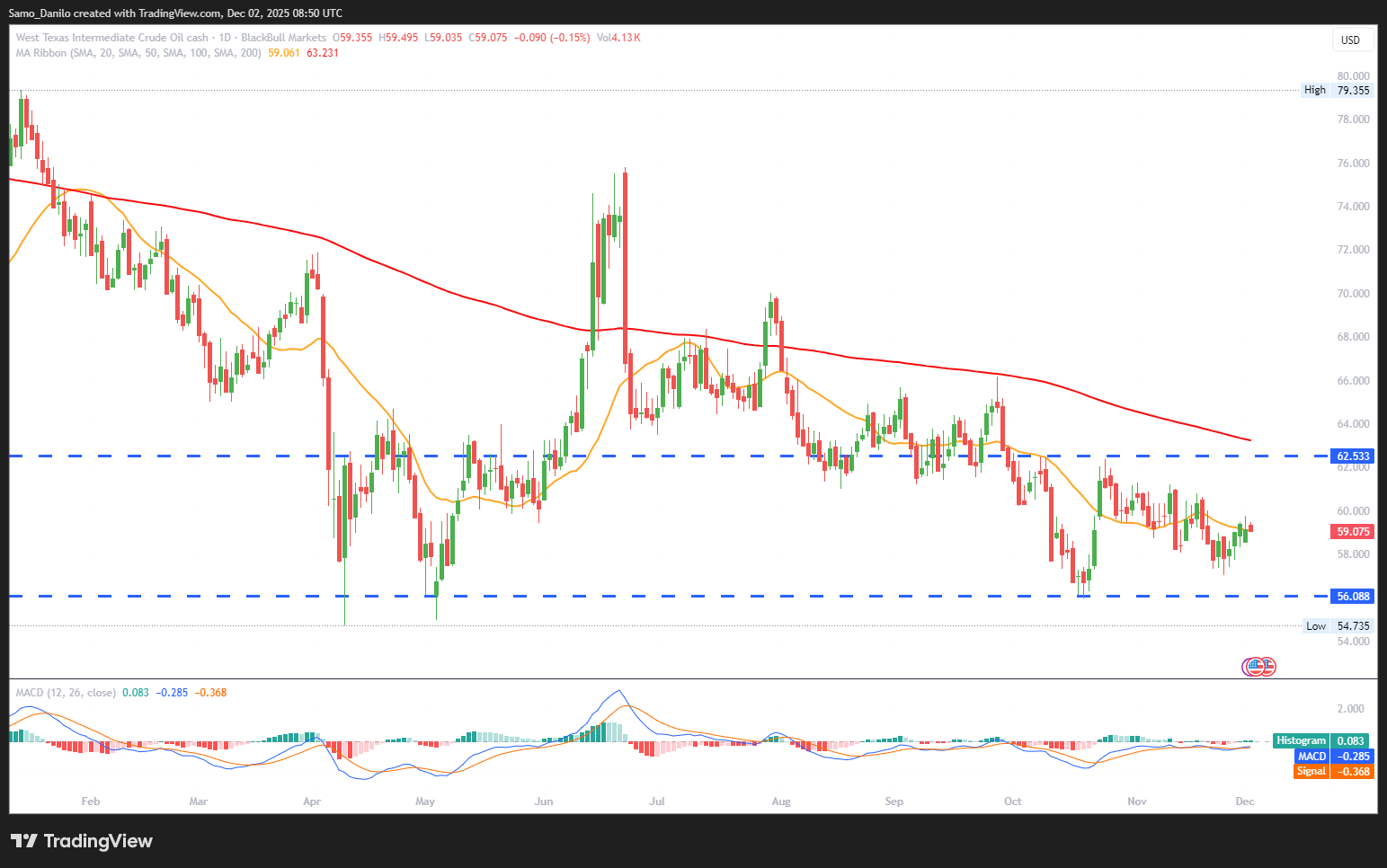
- Crude Oil Price: WTI crude remains neutral in early European trading on Tuesday, holding at $59.32 per barrel—essentially unchanged from Monday. The lack of movement reflects a balanced market with no fresh catalysts in the very short term.
- Long-term Production: The group approved a new mechanism to assess members’ maximum production capacity, which will form the basis for output targets from 2027. This signals an effort to improve quota transparency and stabilize long-run supply expectations.
- Diplomatic Efforts: US Special Envoy Witkoff and Jared Kushner are heading to Moscow for talks with President Putin, suggesting renewed momentum toward potential negotiations. Any progress or setbacks in these discussions could influence risk sentiment and oil volatility.
- Nigeria Investments: Nigeria launched a tender for 50 oil and gas blocks, aiming to attract $10 billion in investment and add 400,000 barrels per day of production over the next decade. The offering spans offshore, frontier, and deepwater deposits, signaling a push to revitalize the country’s energy sector.
- Maritime Risks: A Russian gasoil tanker was struck by multiple explosions off the coast of Senegal—the third similar case recently. Rising threats to maritime transport heighten supply-chain risks and may offer mild support to crude prices.
| SMA (20) | Falling | | |
| RSI (14) | Slightly Rising | |
|
| MACD (12, 26, 9) | Slightly Falling | |
Closing statement: With prices steady and catalysts mixed, WTI remains range-bound in the near term. Structural decisions by OPEC+ and rising geopolitical and maritime risks could tilt the balance slightly bullish, but sustained momentum will depend on broader global demand signals.
DAX
- DAX Price: Germany’s DAX 40 index hovers around 23,680 points, reflecting restrained market appetite as investors digest mixed domestic data. The index remains in a consolidation phase with downside risks tied to weakening fundamentals.
- German Inflation: Germany’s HICP climbed to 2.6%, its highest in nine months and above expectations, while national CPI held steady at 2.3%. Core inflation eased to 2.7%, suggesting persistent but gradually moderating price pressures.
- Manufacturing Activity: S&P Global reported Germany’s manufacturing sector shrank at the fastest pace in nine months. The HCOB final PMI fell to 48.2 from 49.6, below the flash estimate, driven by a pronounced drop in new orders and ongoing structural weakness.
- Consumer Sentiment: German households are entering the holiday season with subdued spending intentions, as consumer confidence sinks to its 2024 low. This is troubling for retailers during the crucial “golden quarter,” signaling weak domestic demand.
- Defense Stocks: Shares of Hensoldt, Rheinmetall, and Renk fell between 2.5% and 3.5% as US and Ukrainian officials described weekend peace negotiations with Russia as “productive.” Easing geopolitical tensions reduced the immediate appeal of defense-sector plays.
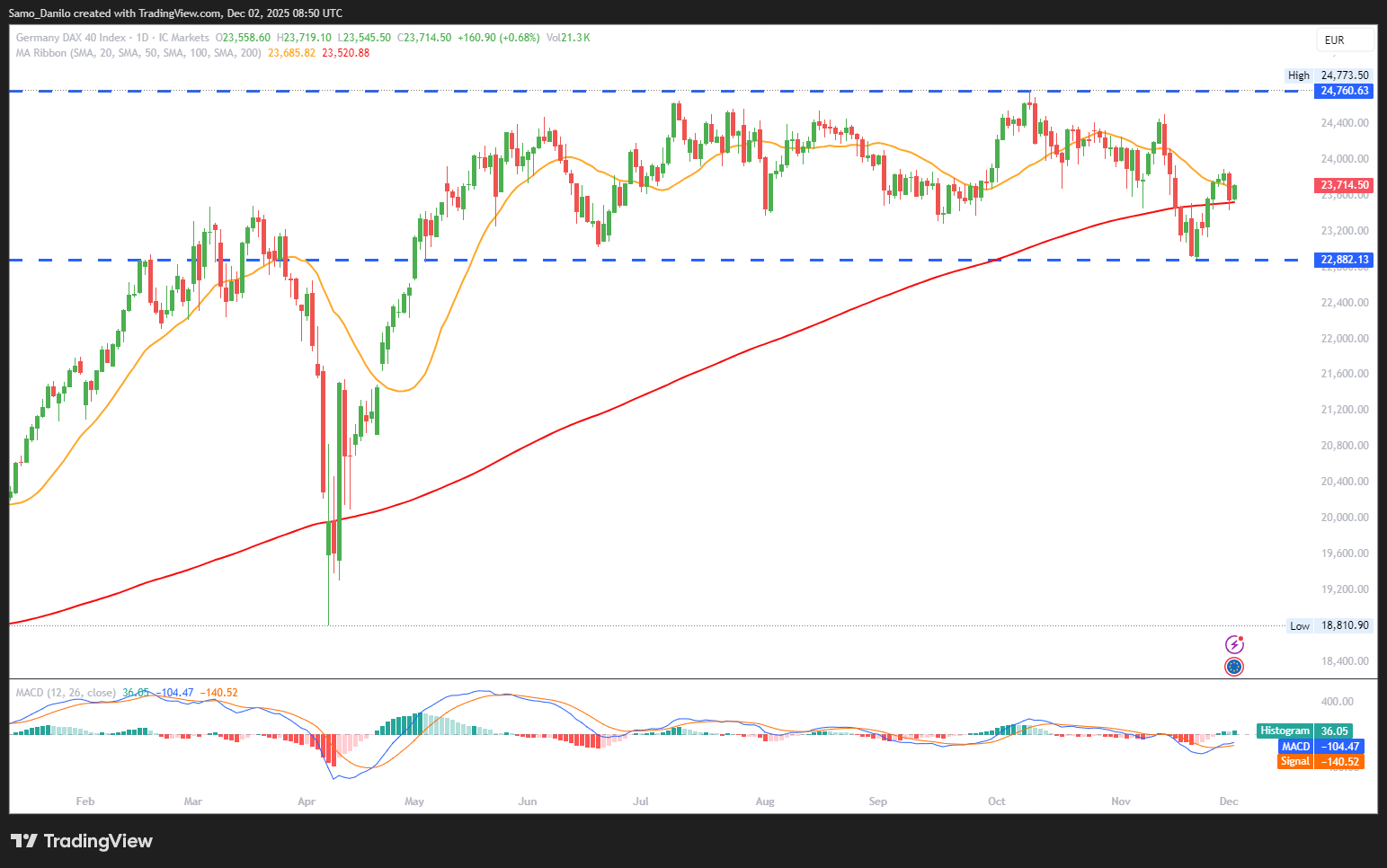
| SMA (20) | Slightly Falling | |
| RSI (14) | Slightly Rising | |
| MACD (12, 26, 9) | Slightly Falling | |
Closing statement: Soft economic data and fragile consumer confidence continue to weigh on Germany’s equity outlook. While inflation dynamics complicate the policy path, any geopolitical de-escalation could temporarily support risk sentiment but pressure defense-heavy segments.