
EURUSD
- EUR/USD Price: The pair advances during Wednesday’s European session, building on recent momentum as the Euro outperforms amid a softer US Dollar backdrop. Market flows remain supportive in the short term.
- Eurozone Inflation: Inflation in the Eurozone ticked higher in November, reducing the likelihood of additional ECB rate cuts under current conditions. The data reinforces the narrative that underlying price pressures remain sticky.
- ECB Policy: Expectations are firming that the ECB has concluded its rate-cutting cycle. President Lagarde reiterated that lending rates are at the “right level,” helping stabilize rate-differential expectations in favor of the Euro.
- Geopolitical Risks: Hostilities in Eastern Europe continue to pose a risk for the Euro. Putin’s warning that Europe’s demands are unacceptable, and that Russia is “ready now” if conflict escalates, adds uncertainty and could temper upside momentum.
- Eurozone Data: Markets await HCOB Flash PMIs, the Eurozone PPI, and a series of ECB speeches later this week. These releases will help clarify the region’s growth trajectory and provide additional guidance for the currency.
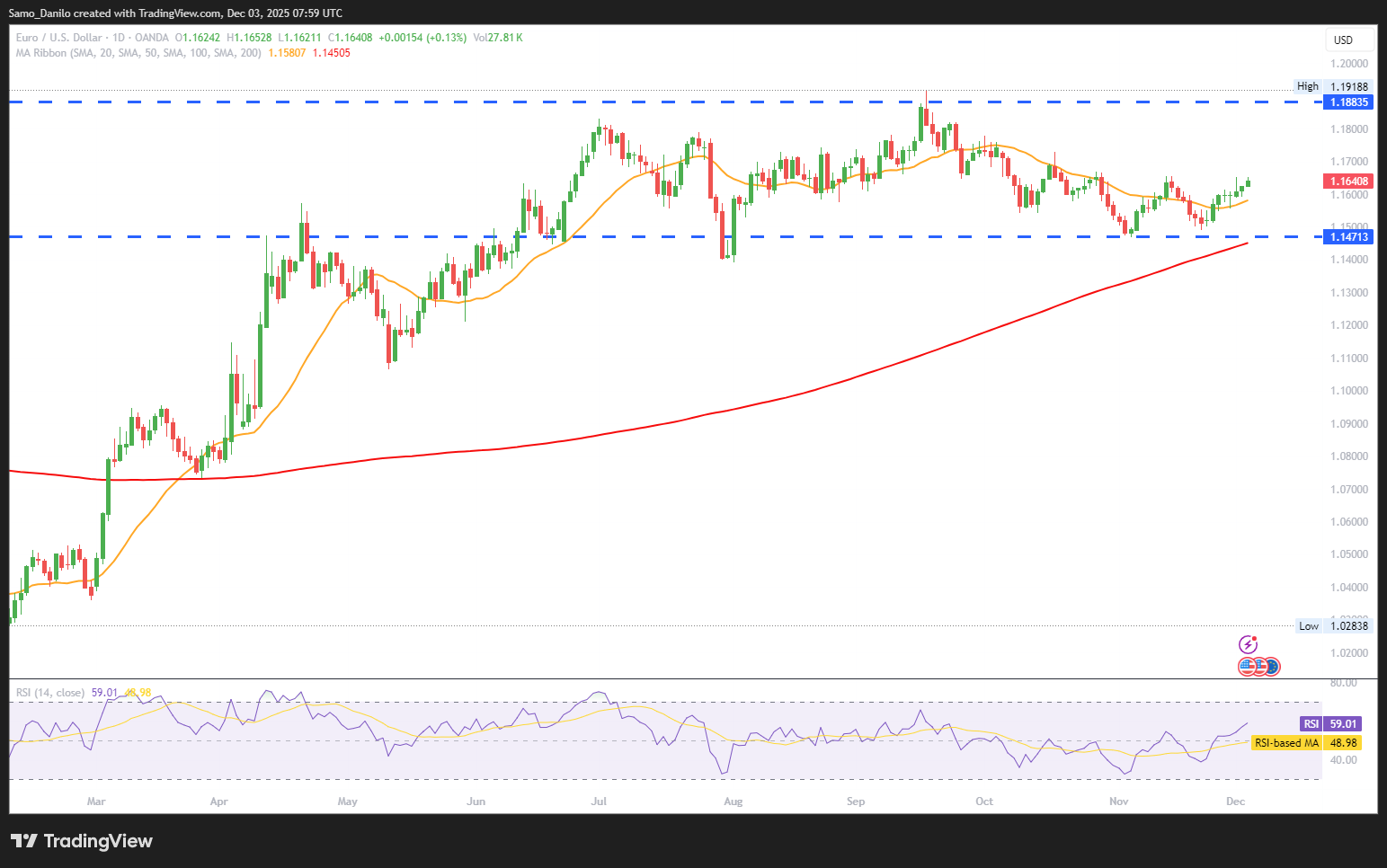
| SMA (20) | Slightly Falling |  |
|
| RSI (14) | Rising |  | |
| MACD (12, 26, 9) | Slightly Rising | |
Closing statement: EUR/USD may remain supported by shifting ECB expectations and recent inflation dynamics, but geopolitical tensions and incoming data could inject volatility.
GBPUSD
- GBP/USD Price: The pair gains traction during Wednesday’s early European session, extending its recovery as buyers regain control following earlier consolidation.
- Fiscal Concerns: The Autumn Budget’s indication of higher overall taxation, combined with easing inflation and a cooling labor market, increases expectations of a shift in BoE policy. These domestic pressures keep Sterling’s upside somewhat limited.
- PM Starmer: Prime Minister Keir Starmer emphasized the need to bring inflation and interest rates down to support investment and long-term economic growth, reinforcing the policy narrative around easing conditions.
- Rate Cut: Analysts now project the BoE to lower rates to 3.75% next month, with market pricing reflecting a strong 90% probability. This outlook continues to cap bullish momentum for the Pound.
- US Data: Traders now shift focus to the upcoming ADP Employment Change and ISM Services PMI data. These releases may offer clues on US economic resilience and could influence Dollar flows later in the session.
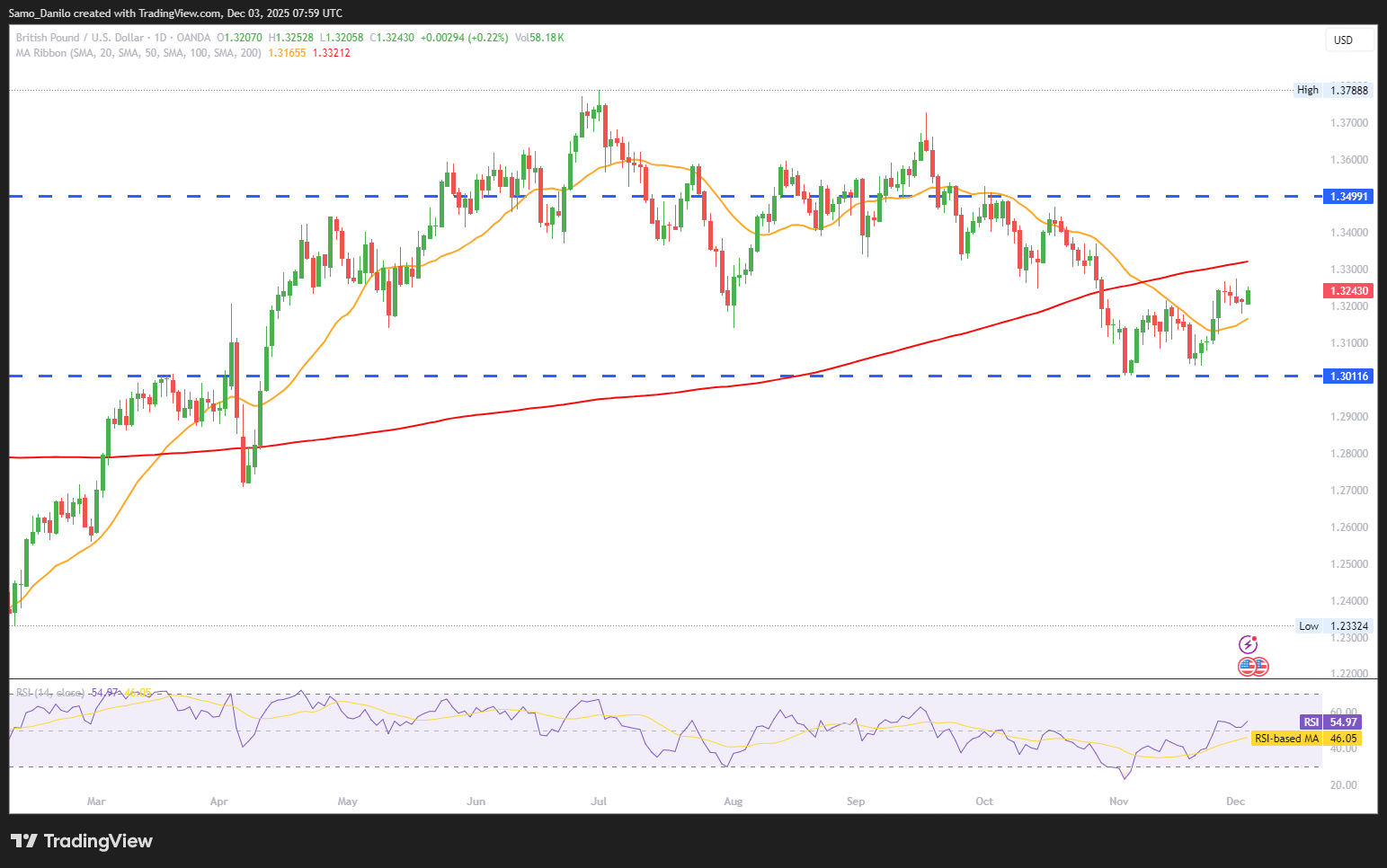
| SMA (20) | Slightly Falling | |
| RSI (14) | Slightly Rising | |
| MACD (12, 26, 9) | Slightly Falling | |
Closing statement: GBP/USD retains a modest upward bias, but expectations of a BoE rate cut keep the pair vulnerable to US data surprises and shifts in global risk sentiment.
XAUUSD
- XAU/USD Price: XAU/USD trades with a mild positive bias during Wednesday’s Asian session, but the move lacks strong follow-through as mixed macro and geopolitical signals keep traders cautious.
- Fed Leadership: The Dollar dipped after President Trump referred to Kevin Hassett only as a “potential” Fed Chair, adding uncertainty around the future rate path and offering mild support to Gold.
- Chinese Services: RatingDog’s services PMI slowed to 52.1 in November — the weakest expansion since June. Softer domestic demand, despite better export activity, tempers risk sentiment and adds a slight safe-haven bid to Gold.
- US–Russia Talks: A five-hour Kremlin meeting between President Putin and US envoys Steve Witkoff and Jared Kushner on a possible Ukraine peace deal introduces new geopolitical variables, though no clear breakthrough emerged.
- Tech Sector: The S&P 500 closed slightly higher, while Nvidia’s early gains faded after Amazon announced its competing AI chip, Trainium 3. The mixed market tone limits Gold’s upside as risk appetite remains uneven.

| SMA (20) | Slightly Rising | |
|
| RSI (14) | Rising | | |
| MACD (12, 26, 9) | Slightly Rising | |
Closing statement: Gold remains supported by softer USD dynamics and geopolitical uncertainty, but the lack of strong conviction suggests the metal may continue to trade in a tight range until clearer signals emerge from US data and Fed policy expectations.
CRUDE OIL
- Crude Oil Price: WTI crude edges higher early Wednesday in Europe, trading near $58.70 per barrel and extending gains from Tuesday’s close at $58.51 as mild risk appetite supports prices.
- EU Shift: The EU’s agreement to phase out all Russian gas imports by 2027 signals a major structural energy shift, reinforcing long-term expectations of tighter supply diversification.
- API Draw: API data showed a 2.48 million-barrel decline in US crude inventories last week, following a 1.9 million-barrel drop previously, offering near-term support to oil prices.
- SPR Refill: The US Strategic Petroleum Reserve rose by 300,000 barrels to 411.7 million, reflecting ongoing efforts by the DoE to rebuild emergency reserves depleted during the Biden era.
- India Imports: Despite a recent dip in India’s crude imports from Russia, the Kremlin expects flows to rebound as Moscow increases supply and works around sanctions, ahead of Putin’s upcoming visit to India.
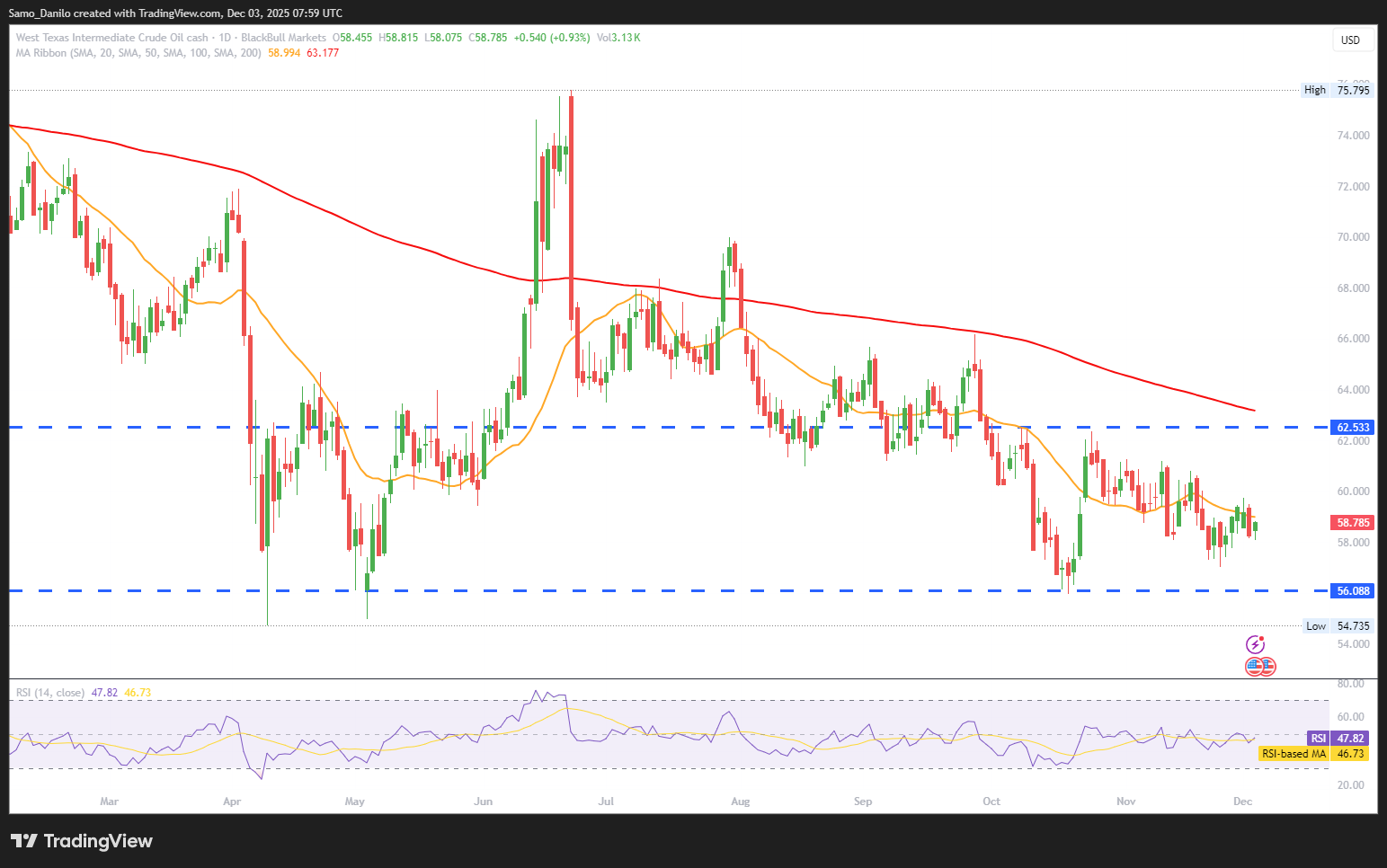
| SMA (20) | Slightly Falling | |
| RSI (14) | Slightly Falling | |
| MACD (12, 26, 9) | Slightly Falling | |
Closing statement: WTI remains supported by tightening US inventories and geopolitical realignments, but upside may stay limited until clearer signals emerge from demand trends and OPEC+ supply strategy.
DAX
- DAX Price: The DAX trades near 23,770 after rebounding sharply from lows around 23,200 and is now testing resistance near 23,780. The broader structure shows a previous swing high around 24,600 and strong support near 23,000.
- IMF Warning: The IMF urges Germany to shift pensions toward inflation-based indexation to stabilize long-term costs. Demographic pressures are increasingly threatening the viability of the country’s pension system.
- Industrial Strain: BDI leadership warns that Germany is in “free fall,” as high energy costs, weak global demand, and China’s industrial rise weigh heavily on manufacturing. US tariff pressure adds another layer to an already severe economic challenge.
- Bayer Surge: Bayer shares jumped as much as 15% after the Trump administration backed its appeal to limit Roundup-related cancer litigation at the Supreme Court. Although gains later narrowed, the stock still trades significantly higher on improved legal sentiment.
- Rate Expectations: Markets now assign an 89% probability to an upcoming interest rate cut, a substantial increase compared to mid-November. This heightened dovish pricing reflects growing expectations of policy easing.
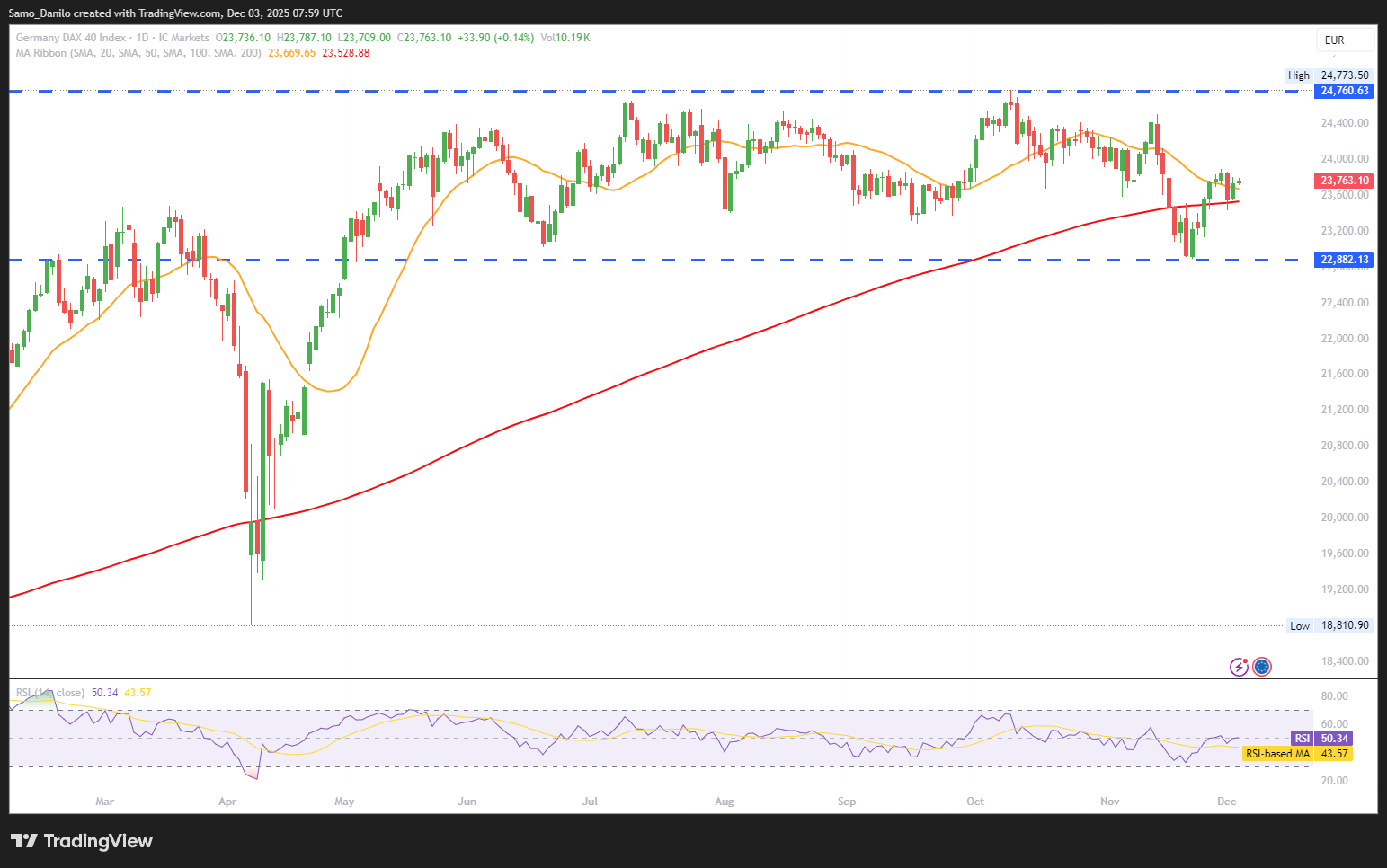
| SMA (20) | Slightly Falling | |
| RSI (14) | Slightly Rising | |
| MACD (12, 26, 9) | Slightly Falling | |
Closing statement: Momentum in the DAX is improving tactically, but structural headwinds in Germany’s economy and policy uncertainty may cap upside until clearer signs of industrial recovery or easing geopolitical pressures emerge.