
EURUSD
- EUR/USD Price: The EUR/USD is climbing toward the 1.1650 level during European trading, supported by a broadly weaker US Dollar and slightly improved risk sentiment in global markets.
- ECB's Lagarde: Christine Lagarde, President of the European Central Bank, highlighted the unusually high level of economic uncertainty and volatility. She emphasized that the central bank stands ready to take the necessary measures to keep inflation under control.
- ECB rates: François Villeroy de Galhau, a member of the European Central Bank Governing Council, called for patience regarding future interest rate decisions. He suggested that policymakers should carefully evaluate the evolving economic effects of the Middle East conflict before adjusting policy.
- Oil supply: The Islamic Revolutionary Guard Corps warned that Iran could block regional oil exports if attacks by United States and Israel continue. The group also announced new operations targeting technological infrastructure in the region, heightening geopolitical risks.
- Inflation data: Attention now turns to the upcoming Consumer Price Index release from the Bureau of Labor Statistics. February’s data is expected to show inflation stabilizing but still remaining above the Federal Reserve target of 2%.
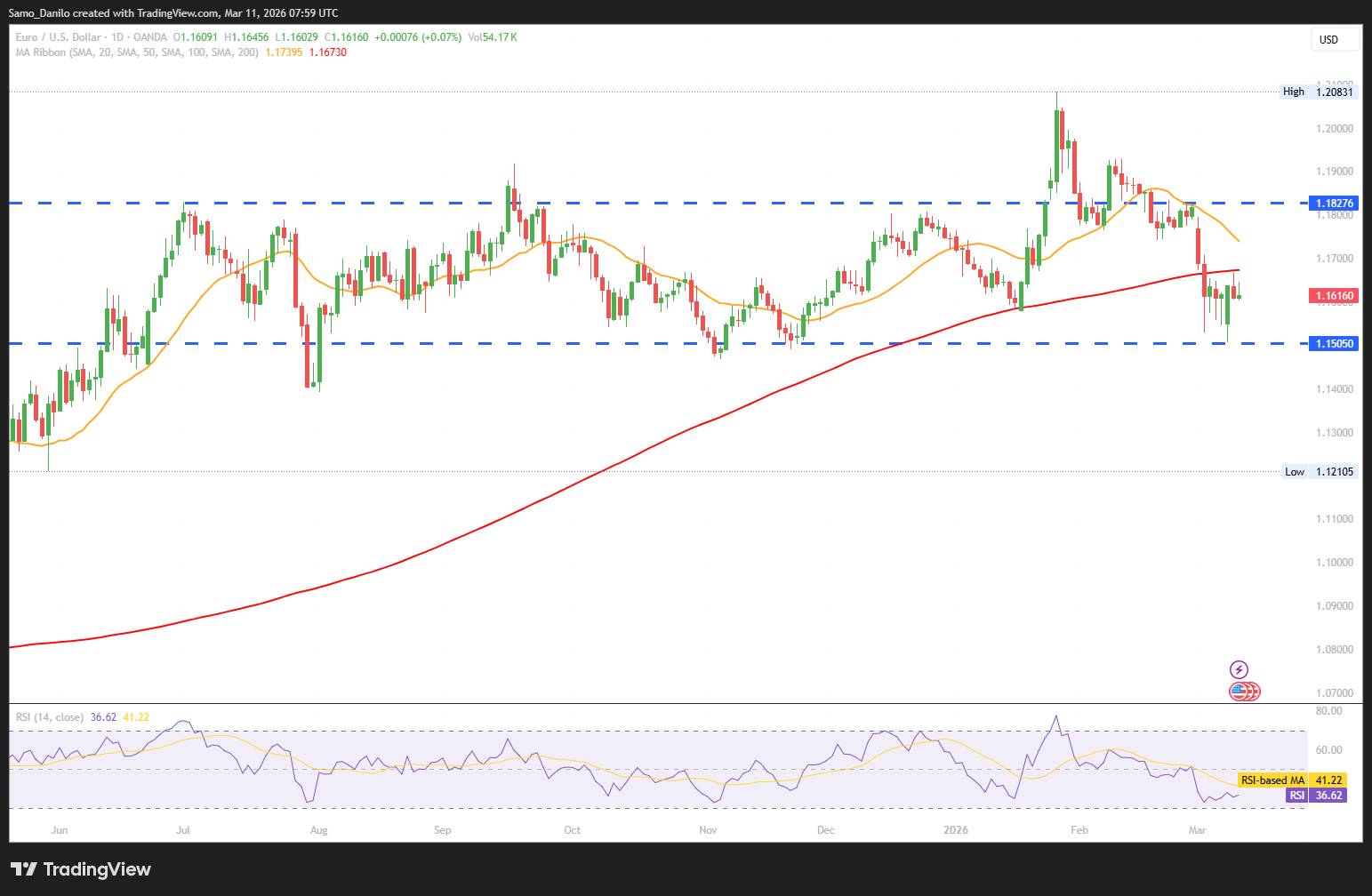
| SMA (20) | Slightly Rising |  |
|
| RSI (14) | Falling |  | |
| MACD (12, 26, 9) | Falling | | |
Closing statement: EUR/USD is supported by a softer US Dollar and cautious ECB commentary, but upcoming US inflation data and ongoing geopolitical tensions could determine the pair’s near-term direction.
GBPUSD
- GBP/USD Price: The GBP/USD continues to trade near the 1.3450 level during the European session, recovering from the previous day’s pullback from around 1.3485. The pair remains supported by shifting interest rate expectations and a slightly softer US Dollar.
- Middle East: Despite comments from Donald Trump suggesting the conflict could end soon, military tensions remain elevated. The Israel Defense Forces reported a new wave of strikes against Iran and additional missile launches toward Lebanon, targeting infrastructure linked to Hezbollah.
- Labor market: The ADP Employment Change four-week average rose to 15.5K, up from the previous reading of 12.8K. While the improvement signals gradual strengthening in private sector hiring, the overall pace remains relatively modest.
- Housing market: Data on Existing Home Sales indicated a 1.7% increase in February, rebounding from January’s 5.9% contraction. The stronger reading suggests some resilience in the US housing sector despite elevated borrowing costs.
- BoE rate: Market expectations for the Bank of England have shifted significantly. Earlier bets for three interest rate cuts have been replaced with roughly a 70% probability that the central bank could deliver a rate hike by the end of the year.
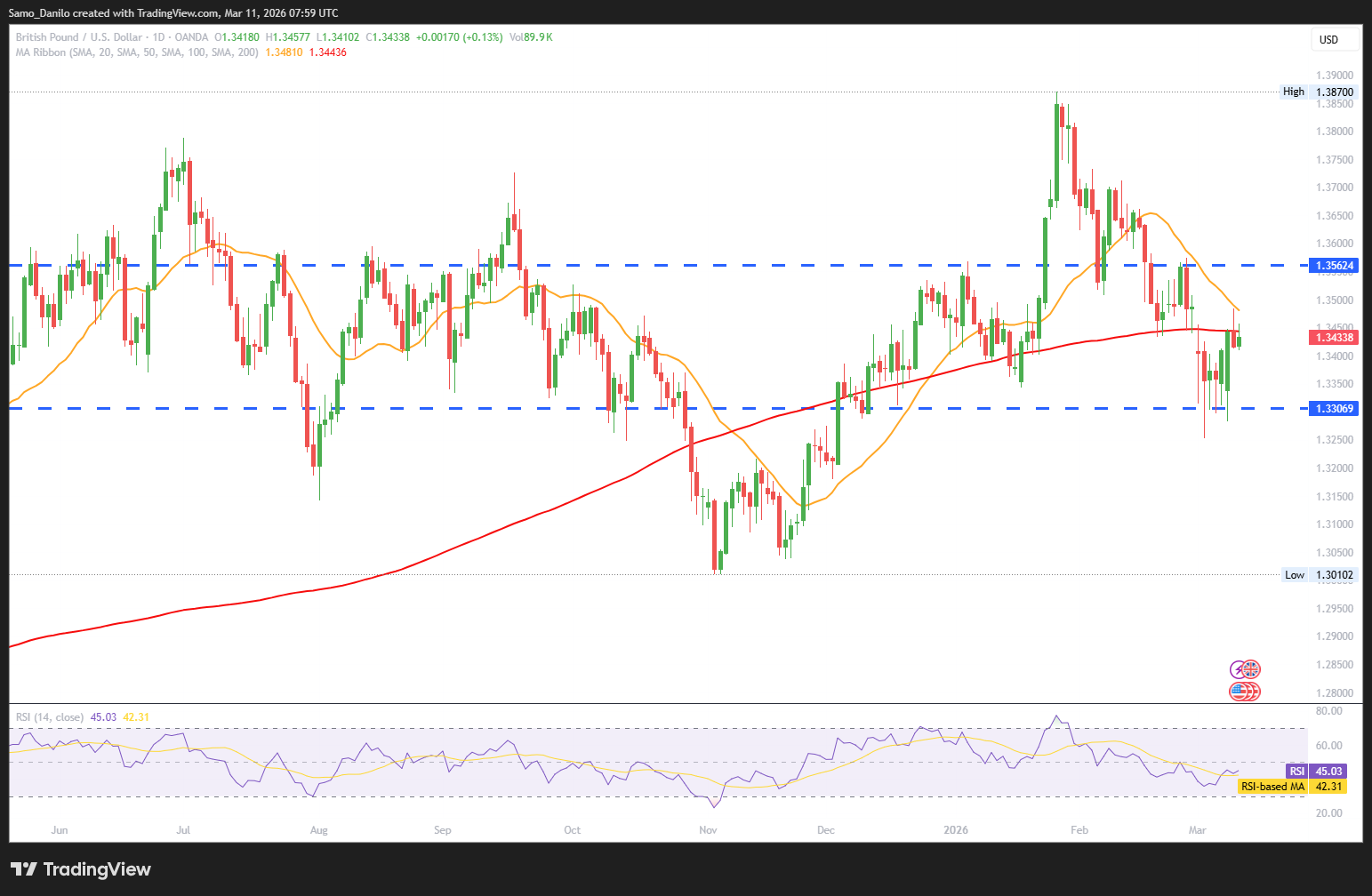
| SMA (20) | Slightly Falling | |
|
| RSI (14) | Slightly Falling | |
|
| MACD (12, 26, 9) | Falling | | |
Closing statement: GBP/USD remains supported by stronger expectations for tighter Bank of England policy and a slightly softer US Dollar. However, geopolitical tensions and incoming economic data will continue to influence short-term price movements.
XAUUSD
- XAU/USD Price: The XAU/USD has lost momentum after briefly rebounding above the $5,000 mark earlier in the session. The Gold price is now trading slightly below this key psychological level, reflecting cautious market sentiment despite the recent decline in oil prices.
- US Inflation: Investors are closely watching the upcoming Consumer Price Index release from the Bureau of Labor Statistics. The data could provide important signals about the policy outlook of the Federal Reserve, particularly regarding the timing of potential interest rate cuts.
- PCE Inflation: Later in the week, attention will shift to the Personal Consumption Expenditures Price Index, the Federal Reserve’s preferred measure of inflation. The release on Friday is expected to influence short-term US Dollar movements and could provide a fresh catalyst for gold prices.
- Business sentiment: The NFIB Small Business Optimism Index remained relatively stable at 98.8 in February, compared with 99.3 in January. The data suggests slightly lower uncertainty among businesses and an improving outlook, alongside more moderate pricing plans.
- Tech sector: Shares in the technology sector may continue their rebound following strong quarterly results from Oracle. Despite significant investment in artificial intelligence infrastructure, the company reported strong monetization of its cloud business, with revenues rising 44% in the latest quarter.
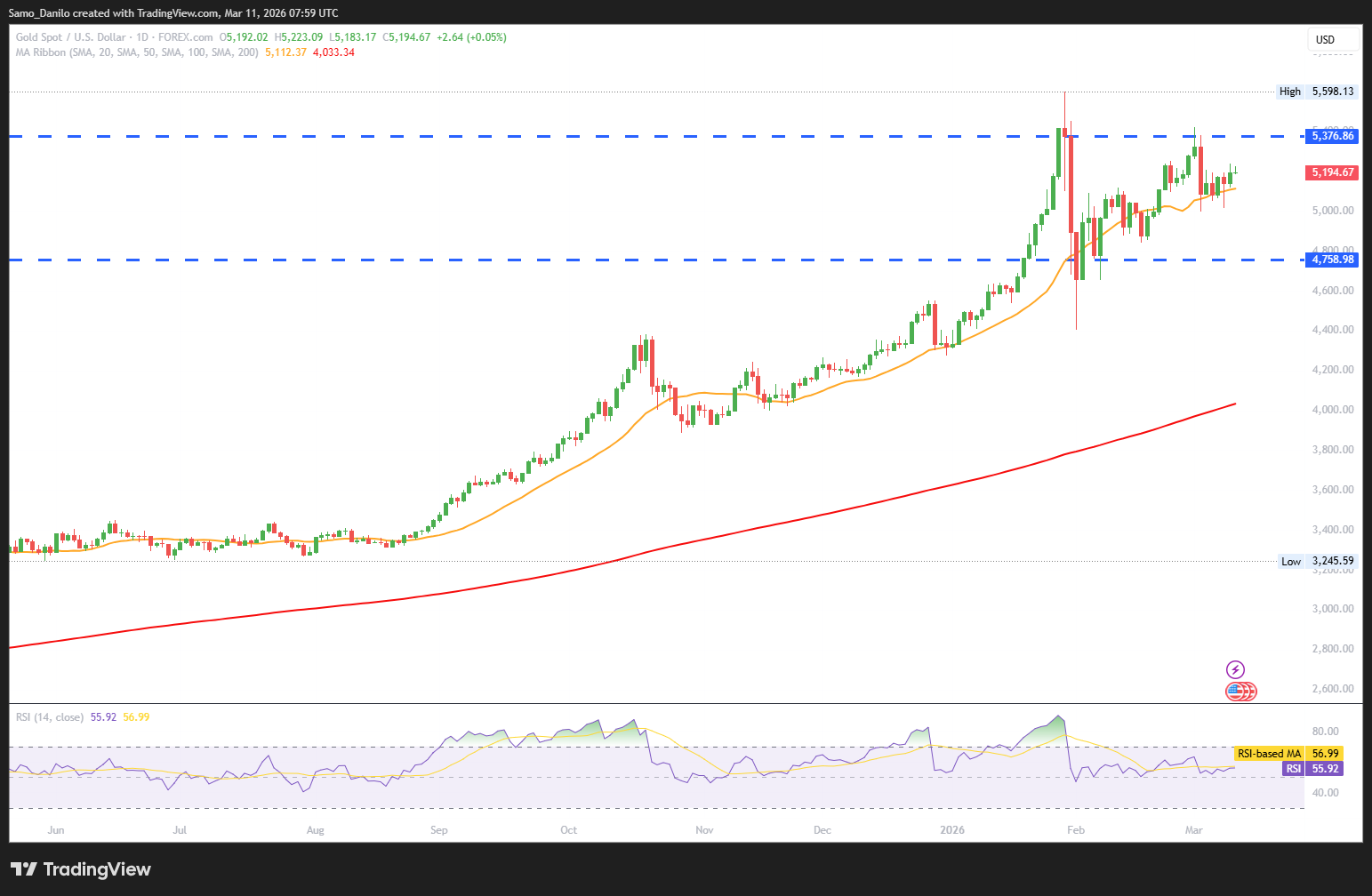
| SMA (20) | Rising | | |
| RSI (14) | Slightly Rising | |
|
| MACD (12, 26, 9) | Rising | | |
Closing statement: Gold is currently struggling to maintain its rebound as investors await crucial US inflation data that could shape expectations for Federal Reserve policy. The upcoming CPI and PCE releases are likely to be decisive for both the US Dollar and the near-term direction of gold prices.
CRUDE OIL
- Crude Oil Price: The Brent Crude Oil price has stabilized around $82 per barrel after surging to nearly $118 earlier in the week. The sharp decline reflects easing concerns over immediate supply disruptions, although volatility remains elevated in the Crude Oil market.
- Trump news: Donald Trump indicated that the conflict with Iran could de-escalate in the near future. Such comments helped calm markets by reducing fears of prolonged disruptions to global energy supply routes.
- Reserve release: According to The Wall Street Journal, the International Energy Agency is considering the largest coordinated release of oil reserves in its history. The move aims to stabilize prices amid supply concerns linked to the United States and Israel conflict with Iran.
- Supply routes: Saudi Arabia is working to redirect some crude shipments via pipelines toward the Red Sea. While not a permanent solution, this measure could help stabilize supply until tanker traffic resumes through the Strait of Hormuz.
- Naval escort: US Secretary of Energy Chris Wright briefly stated on the platform X that the United States Navy had escorted an oil tanker through the Strait of Hormuz. The statement was later deleted, and the White House confirmed that no such escort had taken place.
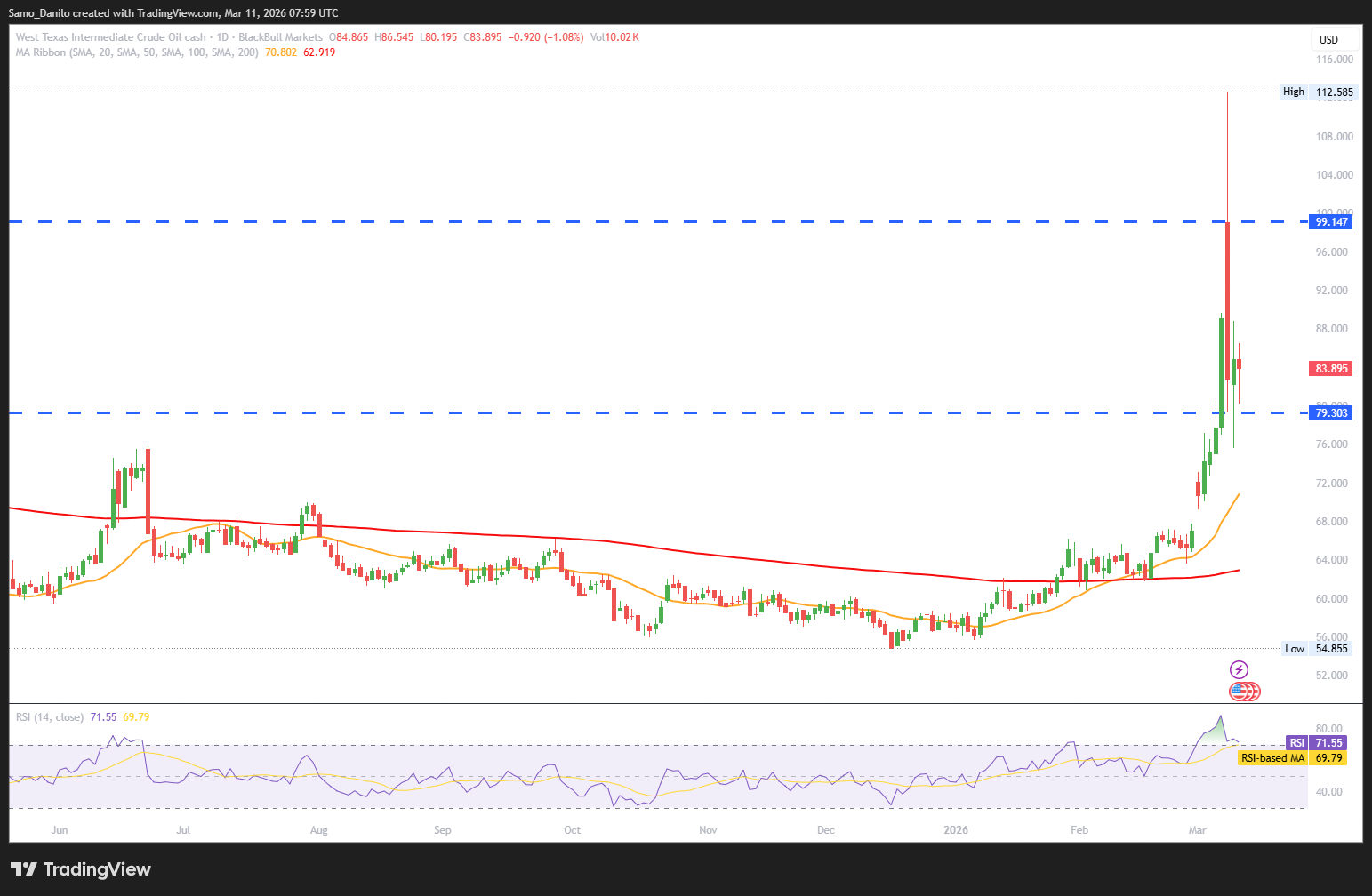
| SMA (20) | Rising | | |
| RSI (14) | Rising | | |
| MACD (12, 26, 9) | Rising | | |
Closing statement: Crude oil markets have cooled after an earlier spike as de-escalation hopes and potential strategic reserve releases ease supply fears. Nevertheless, geopolitical developments and the status of shipping through the Strait of Hormuz will remain key drivers of oil prices in the near term.
DAX
- DAX Price: The DAX is expected to maintain the gains achieved in Tuesday’s rebound but may struggle to extend the rally at the start of the mid-week session. The index continues to trade below the key 24,000 level, indicating that investor sentiment remains cautious.
- German inflation: According to Destatis, Germany’s final February Consumer Price Index rose by 1.9% year-on-year, matching the preliminary estimate. The stable reading suggests that inflation pressures remain relatively contained in Europe’s largest economy.
- Rheinmetall report: Rheinmetall reported double-digit growth in 2025, with sales rising 29% year-on-year to €9.94 billion and operating profit reaching a record high. However, despite the strong performance, the results fell short of market expectations, which weighed slightly on sentiment in the defense sector.
- ECB's Kažimír: ECB policymaker, Peter Kažimír suggested that a potential interest rate hike linked to inflation risks from the Iran conflict could be closer than previously expected. However, he indicated there is currently no strong reason for the European Central Bank to act at the next policy meeting.
- ECB commentary: Markets are also watching remarks from Isabel Schnabel, who is scheduled to speak ahead of the upcoming ECB policy meeting. Alongside Luis de Guindos, she has one of the final opportunities to provide policy signals before the central bank enters its pre-meeting communication blackout period.
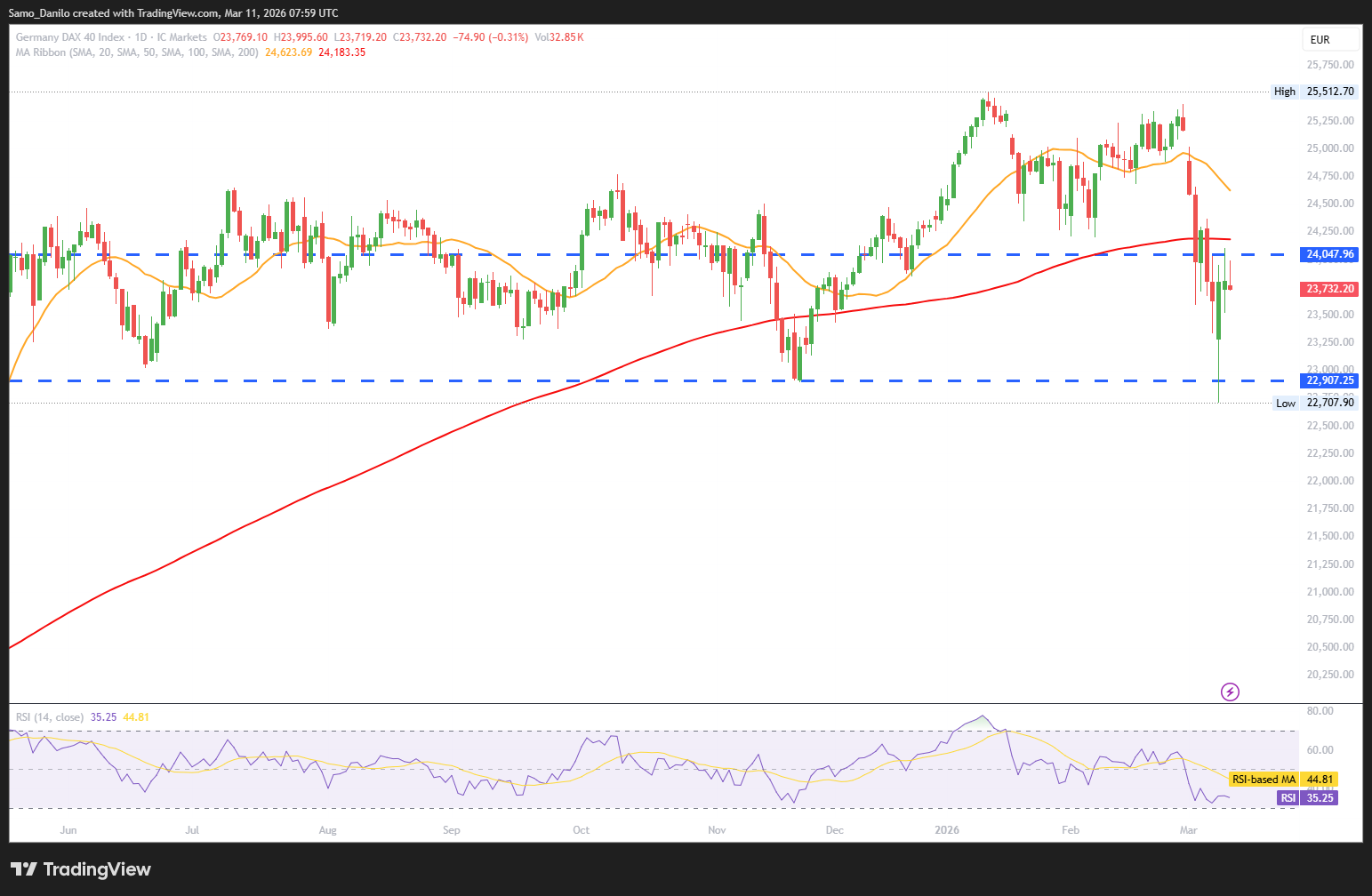
| SMA (20) | Slightly Falling | |
|
| RSI (14) | Falling | | |
| MACD (12, 26, 9) | Falling | | |
Closing statement: The DAX is holding onto recent recovery gains but faces resistance below 24,000 as investors balance stable inflation data with mixed corporate earnings and evolving expectations for ECB policy. Further guidance from ECB officials could play a key role in shaping near-term market sentiment.