
EURUSD
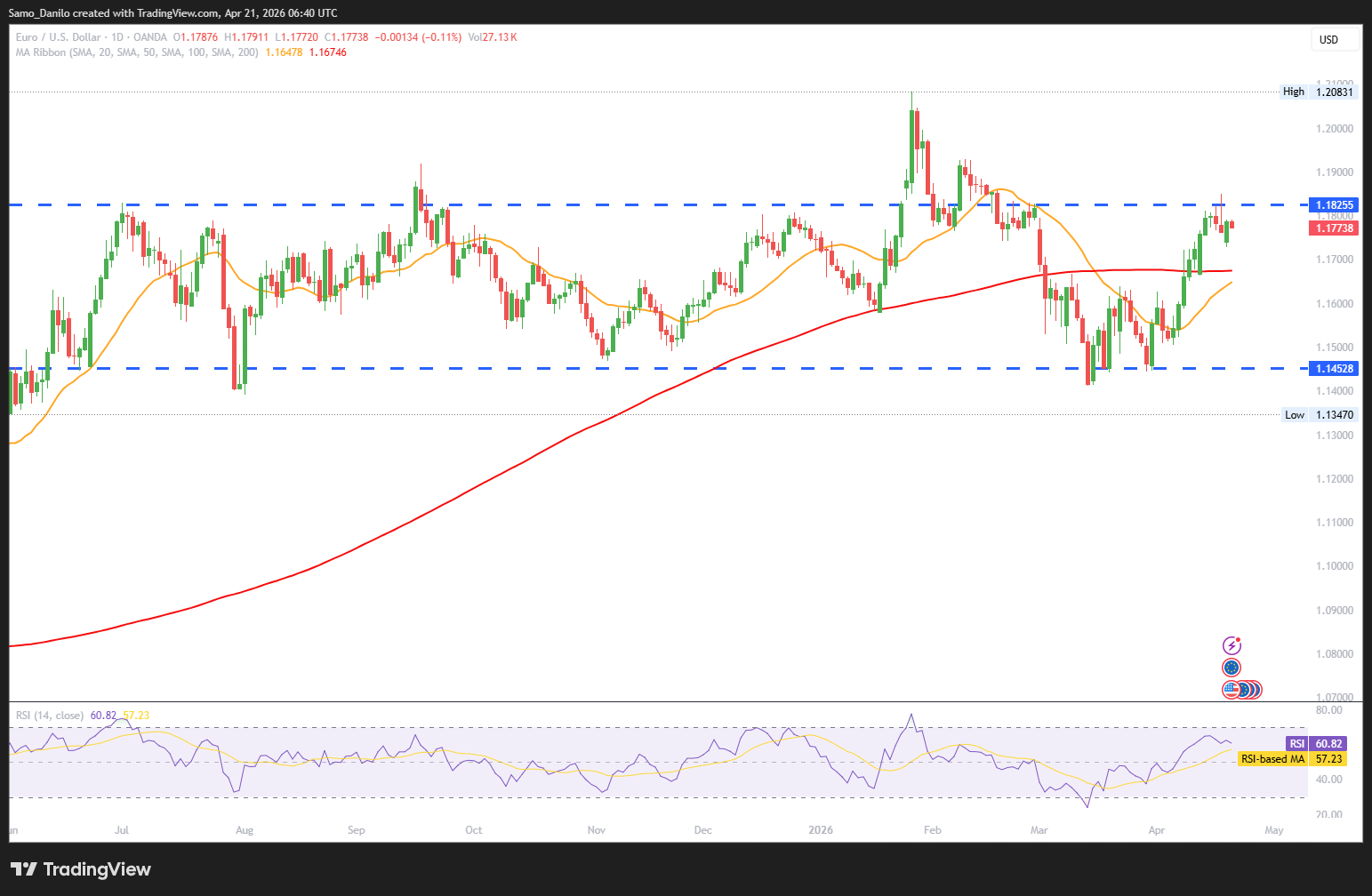
- EUR/USD Price: EUR/USD is hovering just below the 1.1800 level, showing minimal movement in early European trading. This flat price action reflects a lack of strong catalysts, with markets awaiting clearer macro and policy signals.
- BNP Paribas: BNP Paribas projects a modest increase in Eurozone GDP growth to 1.6% in 2026. This outlook is supported by German fiscal expansion, increased defense spending, and investment in AI, indicating steady medium-term economic improvement.
- Trump statement: Donald Trump delivered mixed messages regarding the conflict with Iran, stating there is no urgency to end the war. This prolongs uncertainty and keeps geopolitical risk factors in play.
- ECB's Rehn: Olli Rehn emphasized that the European Central Bank has no predefined rate path and is starting from a balanced position. This reinforces a data-dependent and cautious approach to future monetary policy.
- US docket: Markets are closely watching upcoming US Retail Sales data and testimony from Kevin Warsh. These events are expected to provide important insights into US economic strength and future monetary policy direction.
| SMA (20) | Slightly Rising |  |
|
| RSI (14) | Rising | | |
| MACD (12, 26, 9) | Rising | | |
Closing statement: EUR/USD remains range-bound as balanced ECB messaging and modest Eurozone growth expectations offset ongoing geopolitical uncertainty and upcoming US catalysts. The near-term outlook is neutral, with potential volatility driven by US data and policy developments.
GBPUSD
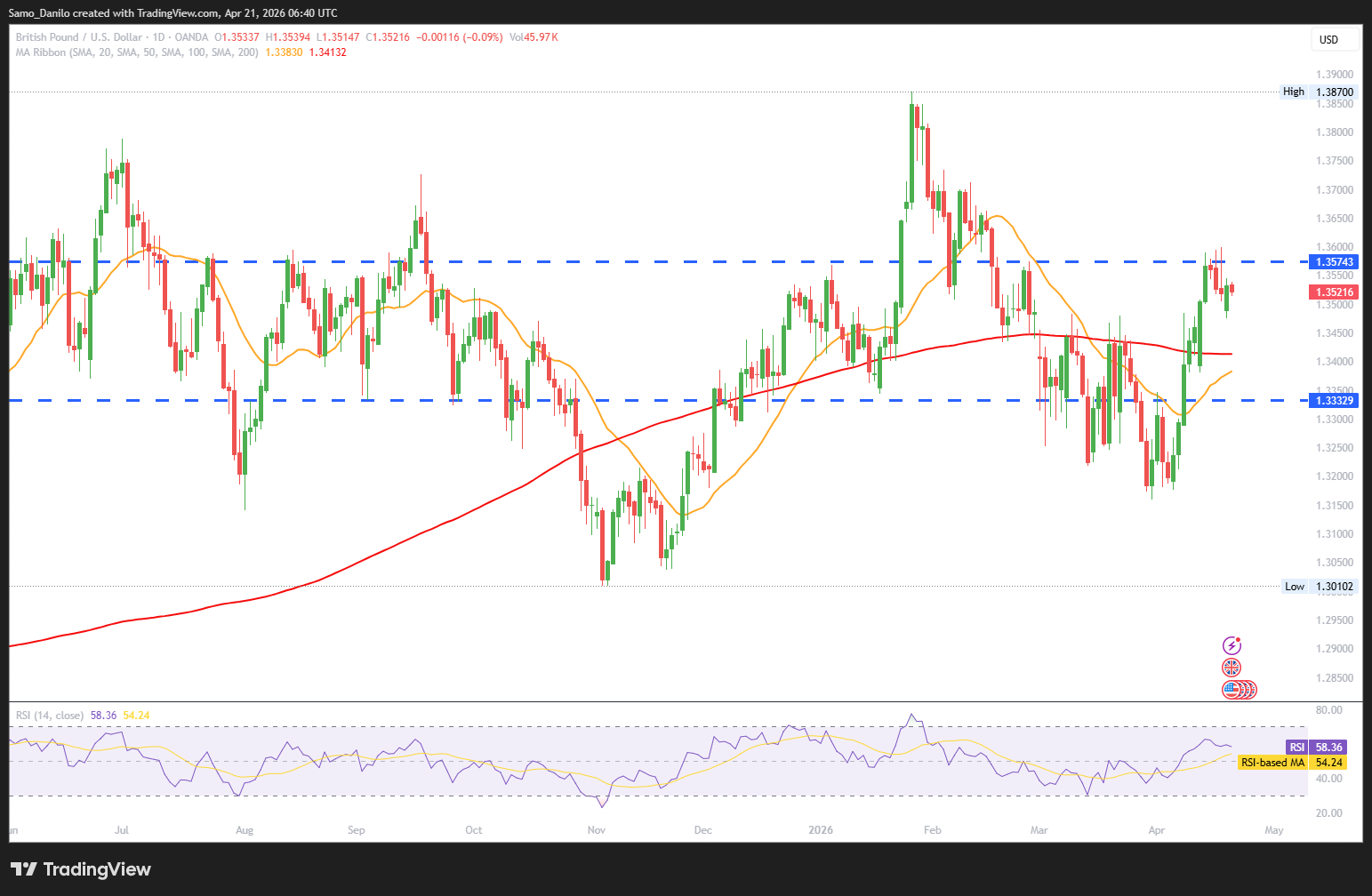
- GBP/USD Price: GBP/USD is attracting fresh buyers above the 1.3500 mark, indicating improved short-term sentiment. This suggests that the pair is stabilizing after recent weakness, with support holding at a psychologically important level.
- Labor market: The UK unemployment rate unexpectedly declined to 4.9%, beating market expectations. This indicates resilience in the labor market and supports a more constructive economic outlook in the near term.
- Claimant Count: Despite lower unemployment, the increase in UK claimant count to 26.8k points to emerging pressure in the labor market. This divergence suggests that while headline figures are strong, underlying conditions may be softening.
- Wage growth: Wage growth, measured by average earnings excluding bonuses, came in slightly above expectations at 3.6% YoY but declined from the previous 3.8%. This indicates moderating income growth, which could ease inflation pressures over time.
- Iran's Ghalibaf: Statements from Iranian Parliament speaker, Mohammad Bagher Ghalibaf, reported by The Guardian, highlight that Iran is unwilling to negotiate with the United States under current conditions. This underscores persistent geopolitical uncertainty.
| SMA (20) | Slightly Rising | |
|
| RSI (14) | Rising | | |
| MACD (12, 26, 9) | Rising | | |
Closing statement: GBP/USD is supported by strong labor market data but faces mixed signals from underlying indicators and geopolitical risks. The near-term outlook is cautiously bullish, with further direction dependent on macro data and global developments.
XAUUSD
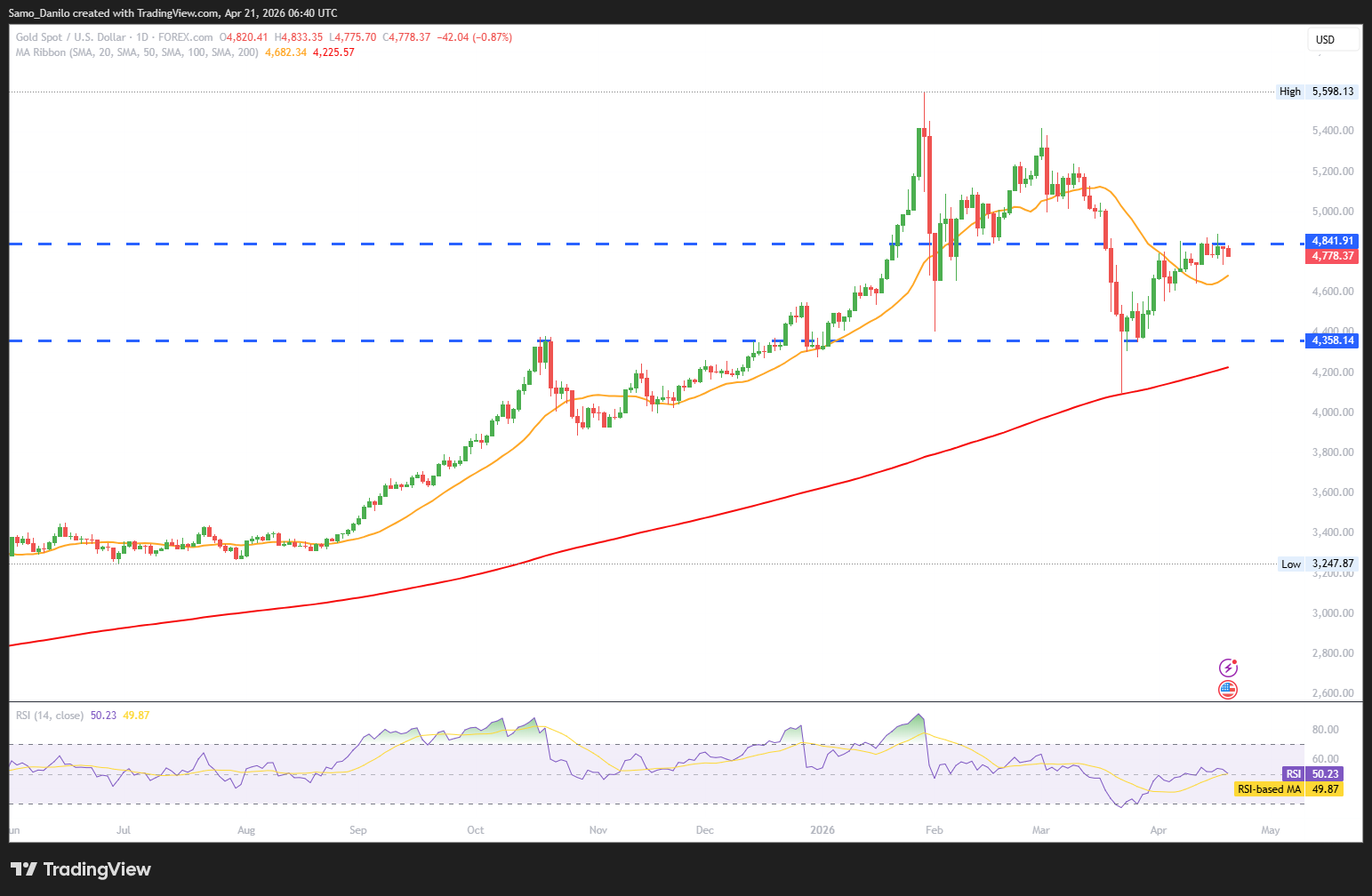
- XAU/USD Price: Gold is extending its intraday decline and has fallen below the $4,800 level, reversing part of the previous session’s recovery. This indicates that bearish momentum is re-emerging, with sellers regaining short-term control.
- Iran's Araghchi: Iranian Foreign Minister Abbas Araghchi highlighted continued ceasefire violations by the United States as a key barrier to diplomacy. This underscores ongoing geopolitical instability, particularly in the Middle East.
- Rate expectations: The CME Group FedWatch Tool shows a 45–50% probability of a rate cut by the Federal Reserve by year-end. This expectation caps US Dollar strength and remains a supportive factor for gold.
- Fed Leadership: Fed Chair nominee, Kevin Warsh, will tell lawmakers at his confirmation hearing Tuesday that he is “committed to ensuring that the conduct of monetary policy remains strictly independent,” according to his prepared opening statement procured by Reuters.
- Corporate news: Apple is reportedly shifting strategic direction, with John Ternus set to become CEO and Tim Cook transitioning to Chairman. While not directly tied to gold, such major corporate shifts can influence broader market sentiment and risk appetite.
| SMA (20) | Slightly Falling |  |
| RSI (14) | Slightly Rising | |
| MACD (12, 26, 9) | Slightly Rising | |
Closing statement: Gold is facing renewed short-term pressure despite supportive rate expectations and ongoing geopolitical risks. The near-term outlook suggests continued volatility, with downside risks prevailing unless macro or geopolitical conditions shift in favor of safe-haven demand.
CRUDE OIL
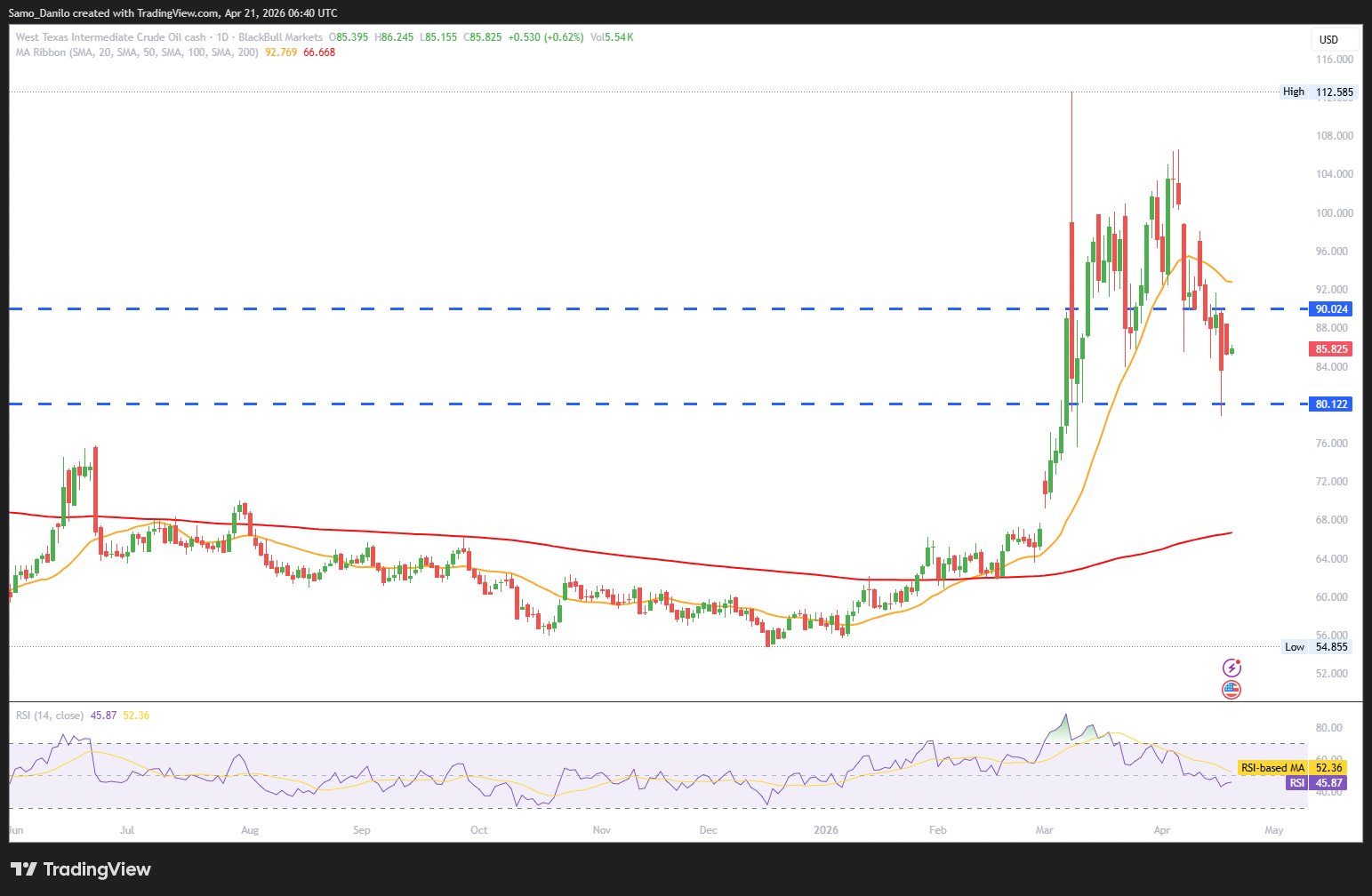
- Crude Oil Price: WTI crude has declined to around $85.70 per barrel following modest gains in the previous session. This suggests short-term selling pressure, though prices remain elevated within a broader volatile range.
- Supply routes: The United States seizure of an Iranian-flagged vessel has intensified tensions with Iran, prompting another closure of the Strait of Hormuz. This ongoing standoff continues to threaten one of the most critical global oil transit routes.
- China reserves: China has built the world’s largest strategic crude stockpile, according to estimates from the Energy Information Administration. This positions China to better withstand supply shocks and highlights growing global energy security concerns.
- Price projections: According to Citigroup, prolonged disruptions could lead to losses of up to 1.3 billion barrels, potentially pushing prices toward $110. This underscores the severity of current supply constraints if tensions persist.
- Kuwait news: Kuwait has declared force majeure on oil shipments, signaling immediate logistical disruptions. At the same time, Société Générale estimates a 3% drop in demand, pointing to a complex balance between supply shocks and weakening consumption.
| SMA (20) | Slightly Rising | |
| RSI (14) | Slightly Falling | |
| MACD (12, 26, 9) | Slightly Falling | |
Closing statement: Crude oil is caught between escalating supply disruptions and emerging demand weakness, creating a highly volatile environment. The near-term outlook remains uncertain, with upside risks dominating if geopolitical tensions continue to constrain supply.
DAX
- DAX 40 Price: Following Monday’s decline, the DAX is showing signs of recovery, trading around 24,510 points. This indicates a tentative rebound, with investors cautiously re-entering the market after recent selling pressure.
- Beiersdorf news: Beiersdorf reported a decline in quarterly sales, driven by слаб demand for its Nivea brand and disruptions in key international markets. This highlights ongoing challenges in consumer-facing sectors, particularly linked to global demand softness.
- Banking sector: Commerzbank rejected a takeover approach from UniCredit, accusing it of hostile tactics. This conflict introduces uncertainty in the banking sector and may impact investor sentiment toward financial stocks.
- ECB policy: Christine Lagarde emphasized that the European Central Bank will respond based on evolving conditions, particularly the duration of the energy shock. Her remarks underline ongoing uncertainty and a data-dependent policy stance.
- Economic sentiment: The upcoming ZEW Economic Sentiment Index for Germany is projected to decline further into negative territory. This signals deteriorating investor confidence and concerns about the near-term economic outlook.
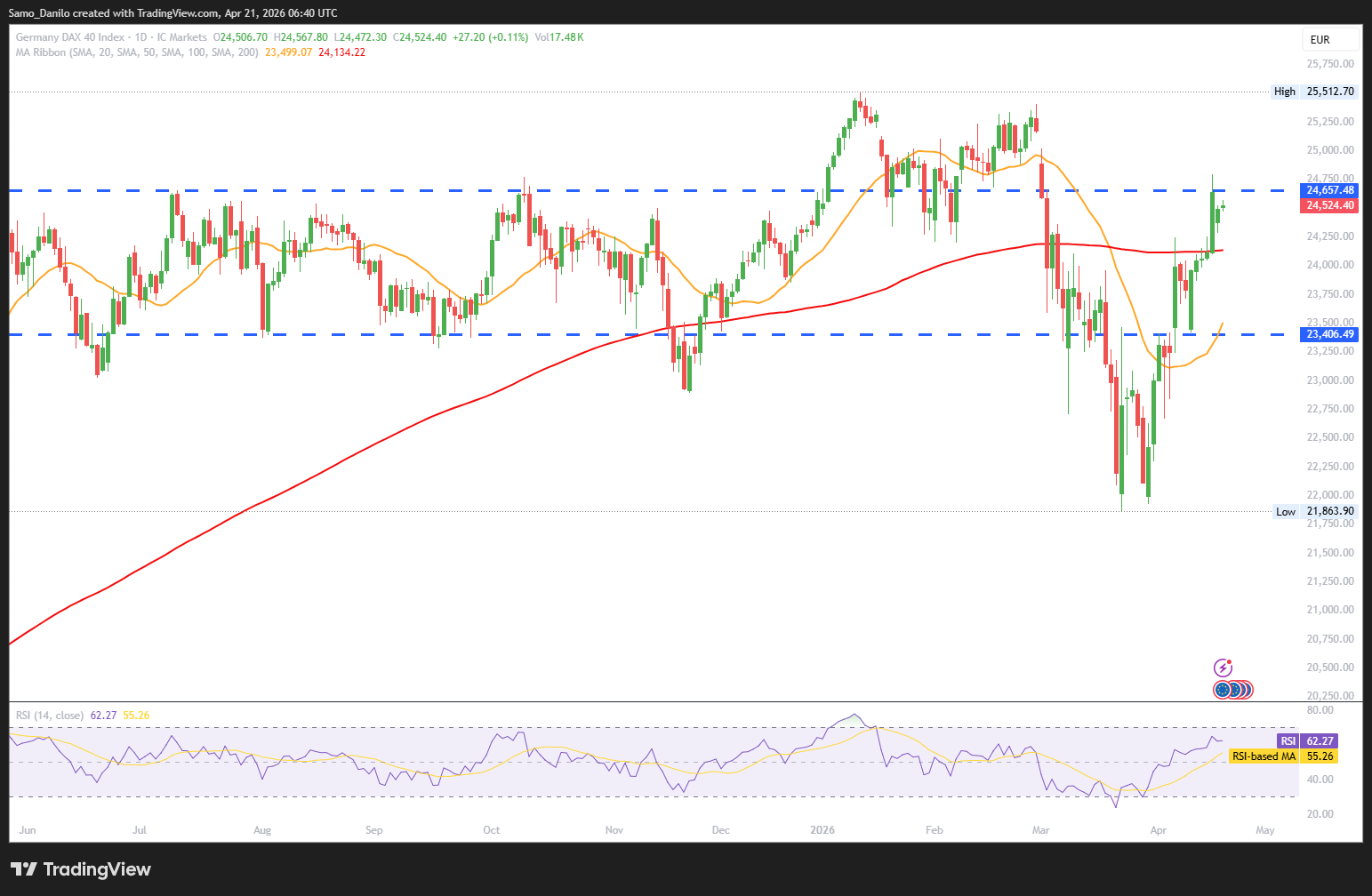
| SMA (20) | Slightly Rising | |
|
| RSI (14) | Rising | | |
| MACD (12, 26, 9) | Rising | | |
Closing statement: The DAX is attempting a modest recovery, but weak corporate results, banking sector tensions, and declining economic sentiment weigh on the outlook. The near-term direction remains cautious, with upside potential limited unless macroeconomic confidence improves.