
EURUSD
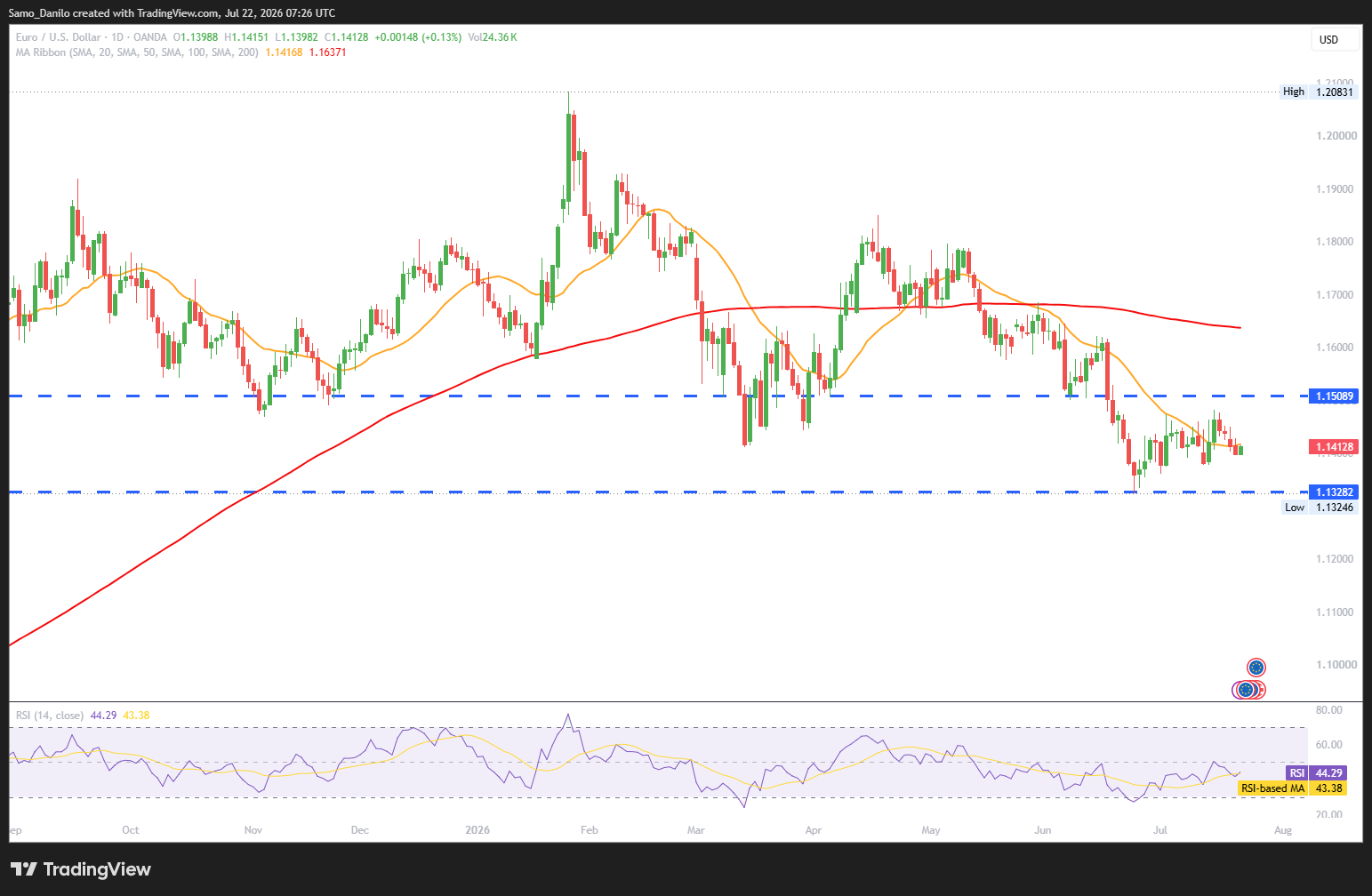
- EUR/USD Price: The EUR/USD pair is trading with modest gains around 1.1405 during Wednesday's early European session.
- US-Iran: The US launched strikes against Iran for the 11th consecutive day, while Tehran warned Washington against targeting its nuclear facilities.
- US tariffs: President Trump is reportedly preparing to replace the temporary 10% Section 122 import surcharge, which expires on July 24, with targeted tariffs ranging from 10% to 12.5% on goods from around 60 countries.
- US data: The Philadelphia Fed Non-Manufacturing Activity Index rose sharply to +7.4 in July, compared with -25.8 previously.
- ECB rates: The European Central Bank (ECB) raised its key interest rates to 2.25% at its June meeting. Markets currently expect the ECB to leave the deposit rate unchanged at 2.25% at Thursday's July policy meeting, making the central bank's communication particularly important for the Euro's next direction.
| SMA (20) | Slightly Falling |  |
| RSI (14) | Slightly Falling | |
| MACD (12, 26, 9) | Slightly Falling | |
Closing statement: EUR/USD remains slightly supported around 1.1405, but the pair lacks a strong directional catalyst. The ECB's upcoming policy decision, developments in the US-Iran conflict, and the prospect of new US tariffs will be crucial for near-term volatility.
GBPUSD
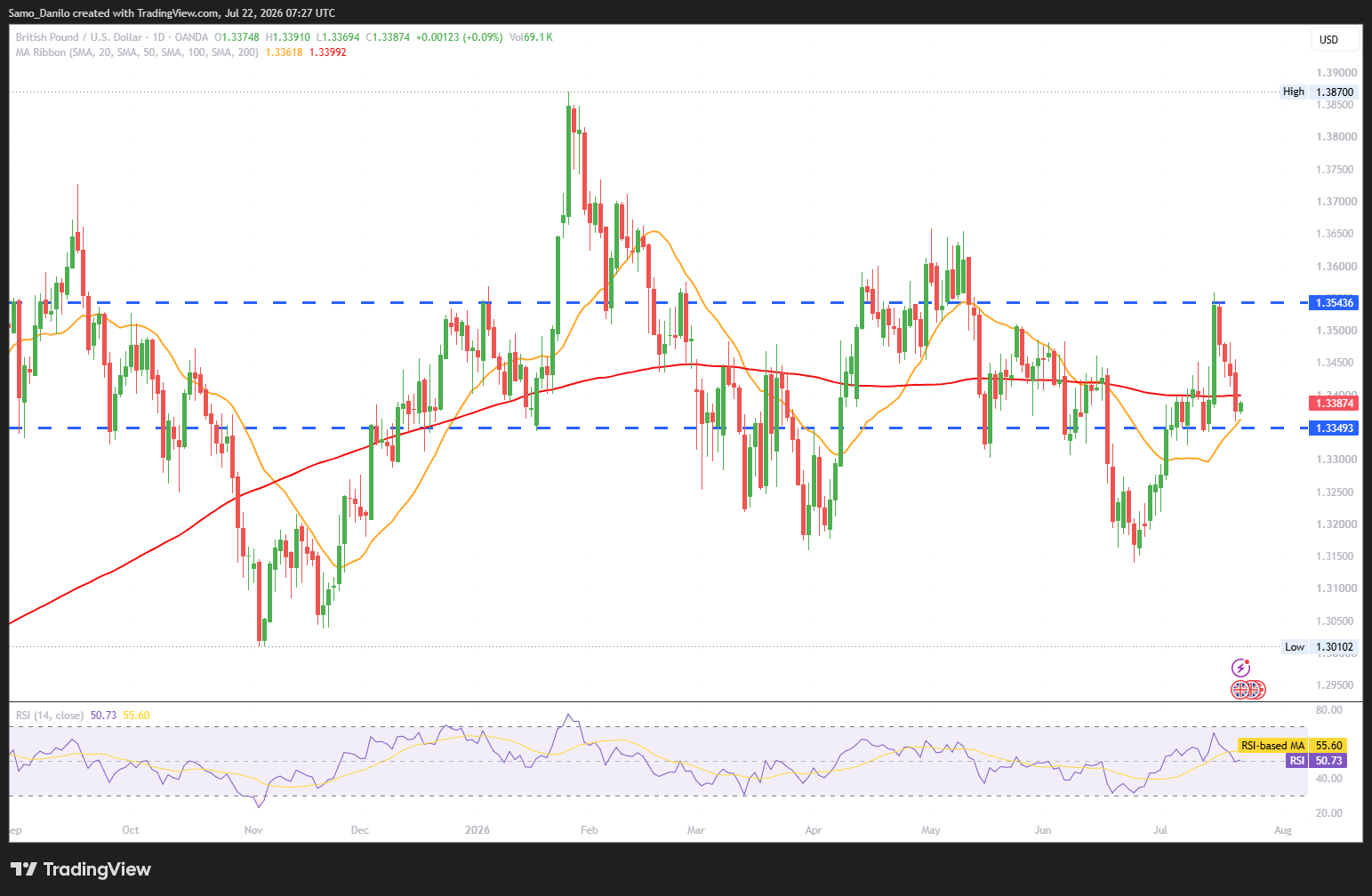
- GBP/USD Price: The GBP/USD pair is trading higher during Wednesday's European session, ending a four-day losing streak after falling toward the 1.3380 area, its lowest level in roughly one week.
- UK inflation: The UK's headline Consumer Price Index (CPI) rose 2.6% year-on-year in June, down from 2.8% in May, according to the Office for National Statistics (ONS).
- Fiscal plans: Rabobank strategists highlighted uncertainty surrounding Prime Minister Andy Burnham's fiscal roadmap as a key source of market concern. Investors remain unsure how the government plans to finance its policy agenda and are awaiting the 10-year plan expected later this year.
- Iran threats: Iran's top joint military command warned that Tehran could expand its attacks against US and allied interests across the region if Washington targets Iran's nuclear facilities.
- US-Lebanon: President Trump hosted Lebanese President Joseph Aoun at the White House and announced closer relations with Lebanon. The US also lifted a 41-year ban on American airlines flying to Lebanon, signaling a potential shift in bilateral relations and regional diplomacy.
| SMA (20) | Slightly Rising |  |
|
| RSI (14) | Slightly Falling | |
|
| MACD (12, 26, 9) | Rising | | |
Closing statement: GBP/USD is attempting to recover after its recent decline, supported by softer UK inflation data. However, uncertainty surrounding the government's fiscal strategy and elevated geopolitical tensions could continue to limit Sterling's upside.
XAUUSD
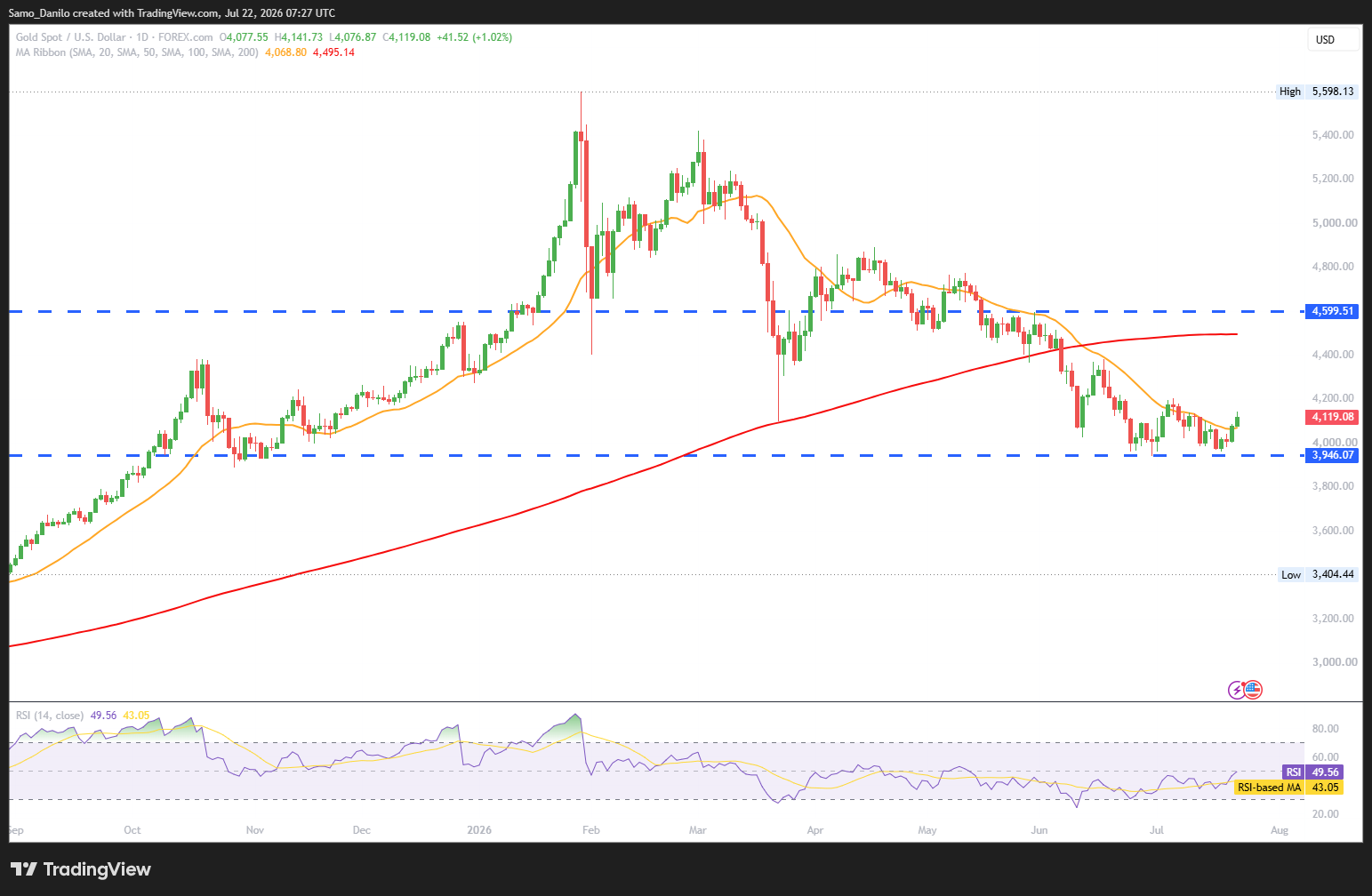
- XAU/USD Price: Gold is advancing for a third consecutive trading session, rising around 1.5% to trade near $4,140 during Wednesday's European session.
- US-Iran: President Donald Trump played down the possibility of immediate negotiations with Iran as the two sides continued exchanging strikes. At the same time, Houthi militants in Yemen threatened shipping in the Red Sea, increasing concerns over regional instability and supporting demand for traditional safe-haven assets such as gold.
- US tariffs: The Trump administration clarified the timeline for tariffs on generic drug imports. The current 0% tariff is expected to remain in place until August 2028, after which tariffs of 100% for one year and 200% thereafter are planned.
- US threats: US Treasury Secretary Scott Bessent threatened sanctions against open-source AI models allegedly involved in intellectual property theft, citing evidence of US large language model watermarks appearing in Chinese models.
- Two-way trading: Analysts at OCBC expect gold to experience more two-way price action in the near term. While geopolitical uncertainty continues to provide support, the analysts warn that any recovery could face resistance from opposing market forces and potential profit-taking.
| SMA (20) | Falling | | |
| RSI (14) | Slightly Rising | |
|
| MACD (12, 26, 9) | Slightly Rising | |
Closing statement: Gold remains firmly supported near $4,140 as geopolitical tensions and trade uncertainty fuel safe-haven demand. However, with analysts warning of strong headwinds to further gains, volatility and two-way trading could dominate the near-term outlook.
CRUDE OIL
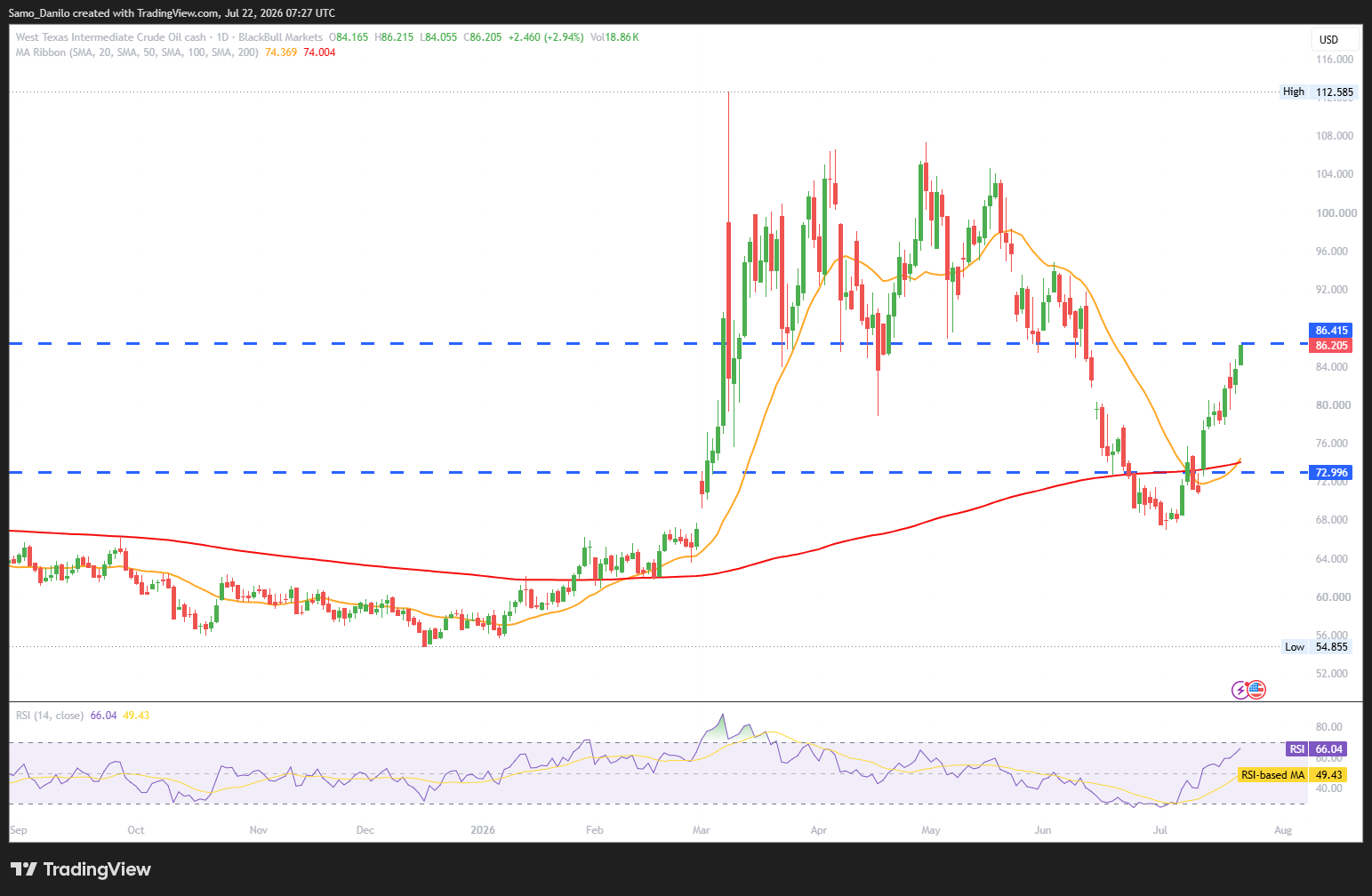
- Crude Oil Price: West Texas Intermediate (WTI) is trading around $86.10 per barrel during the early European session.
- Saudi oil: Two tankers carrying Saudi oil reportedly made U-turns in the Red Sea following recent Houthi threats against shipping.
- India's policy: India's Oil Ministry is reportedly considering relief measures for state-run oil marketing companies (OMCs). The move could help offset the impact of elevated crude prices and protect domestic fuel markets from excessive price pressures.
- Russia's fuel: Russian Deputy Prime Minister Alexander Novak said that the country's fuel market has partially stabilized, although conditions remain difficult in some regions.
- Kazakhstan shipments: Kazakhstan is reportedly considering stopping oil shipments through pipelines to the Black Sea following tanker attacks. Any interruption to this export route could further tighten regional supply conditions and add additional support to crude oil prices.
| SMA (20) | Slightly Rising | |
|
| RSI (14) | Rising | | |
| MACD (12, 26, 9) | Rising | | |
Closing statement: WTI remains strongly supported around $86.10 as rising risks to Red Sea shipping and potential disruptions to Kazakh oil exports increase concerns over global supply. Further developments surrounding regional security and energy transportation routes will remain key drivers for crude oil prices.
DAX
- DAX 40 Price: The DAX 40 is trading higher around the 25,075-point mark on Wednesday.
- Economic sentiment: The ZEW Economic Sentiment Indicator for Germany rose to 26.3 points in July, an increase of 15.8 points from the previous month. The sharp improvement shows that financial market experts are becoming more optimistic about the outlook for the German economy.
- Airbus shares: Airbus shares rose more than 5% after the company announced a €5 billion share buyback programme and introduced new medium-term targets.
- Support strategy: The German government is expected to approve a comprehensive startup strategy aimed at improving access to financing, attracting skilled workers and reducing bureaucracy. The proposed plan includes 152 measures designed to strengthen innovative startups and help more young companies scale and remain in Germany.
- Corporate investment: The “Made for Germany” initiative now includes 139 companies that have committed more than €800 billion in investment in Germany through 2028. The significant increase from last year's commitments highlights stronger corporate investment ambitions, although business leaders continue to call for faster reforms and greater labour-market flexibility.
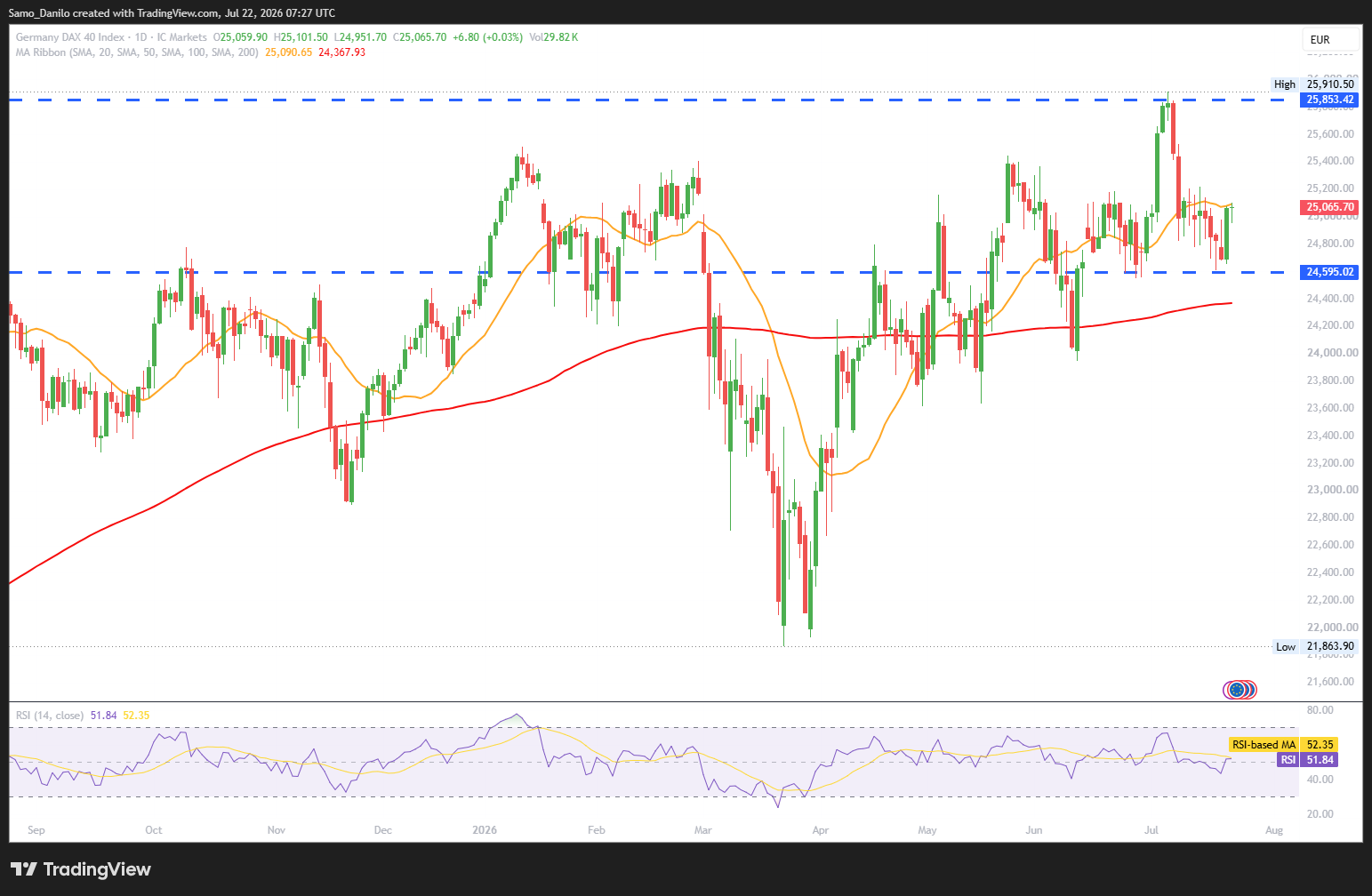
| SMA (20) | Slightly Rising | |
| RSI (14) | Slightly Rising | |
| MACD (12, 26, 9) | Slightly Falling | |
Closing statement: The DAX 40 remains supported by improving economic sentiment, strong corporate investment commitments and positive developments at major companies such as Airbus. Continued structural reforms and evidence of a broader German recovery could provide further support for the index.