
EURUSD
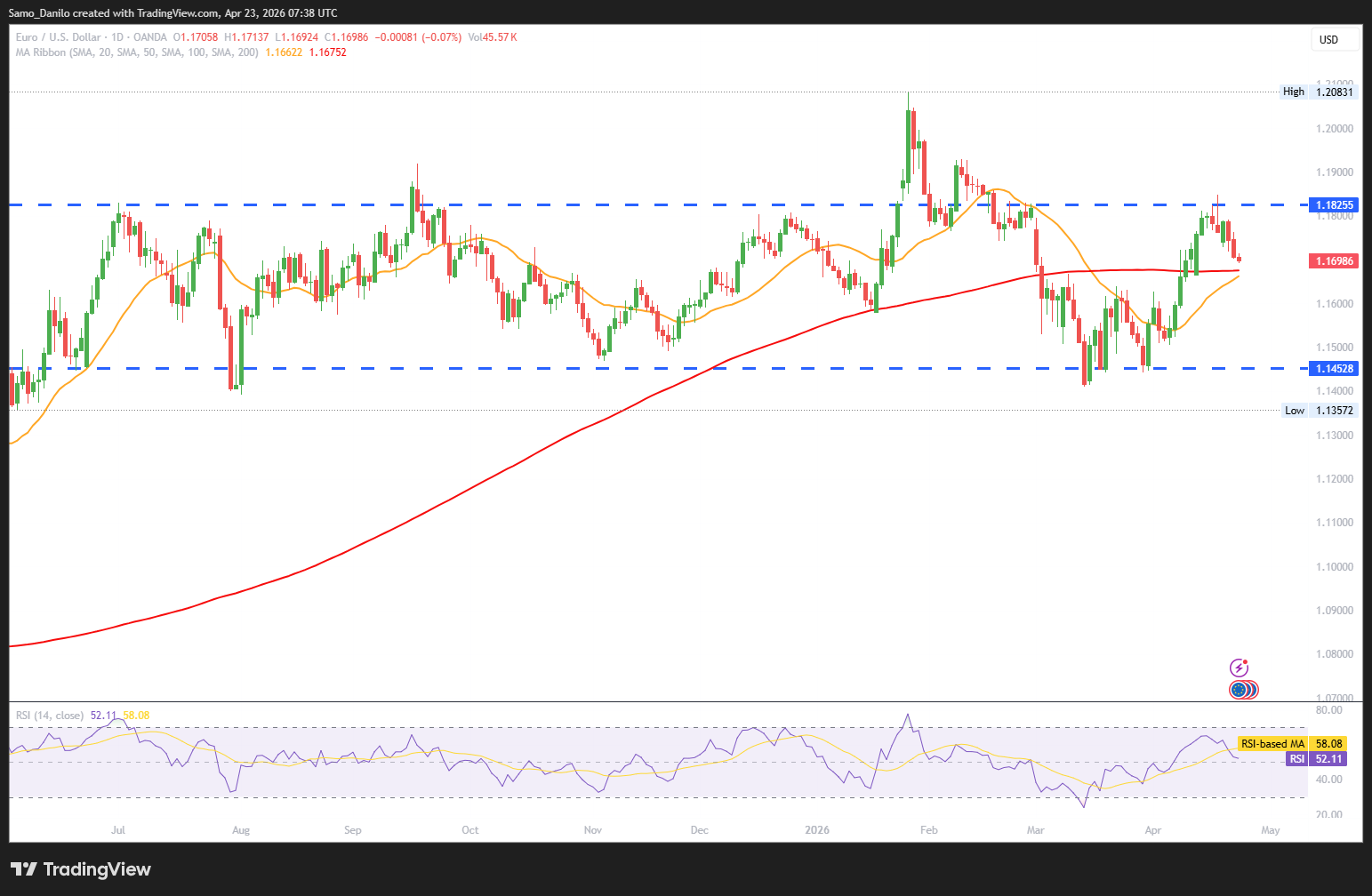
- EUR/USD Price: EUR/USD is gaining strength, moving toward the 1.1700 level in early European trading. This indicates improving short-term sentiment, with buyers stepping in after recent consolidation.
- PMI data: Upcoming Eurozone PMI data is expected to show Manufacturing slipping below the 50 threshold, signaling contraction, while Services remain slightly in expansion. This divergence highlights uneven economic performance across sectors.
- ECB's Kazaks: The European Central Bank is widely expected to keep interest rates unchanged at the upcoming meeting. Martins Kazaks emphasized that policymakers have the flexibility to wait before tightening.
- ECB's Šimkus: Gediminas Šimkus reiterated that while an April rate hike is unlikely, future tightening remains possible. This signals a cautious but not fully dovish stance from the ECB.
- Consumer confidence: The Eurozone consumer confidence indicator fell to its lowest level since late 2022, according to the European Commission. This decline reflects growing pessimism among consumers and potential pressure on future demand.
| SMA (20) | Slightly Rising |  |
|
| RSI (14) | Slightly Rising | |
|
| MACD (12, 26, 9) | Rising | | |
Closing statement: EUR/USD is showing short-term strength, supported by USD softness and stable ECB expectations, but underlying economic weakness limits upside. The near-term outlook remains cautiously neutral, with direction dependent on incoming data and policy signals.
GBPUSD
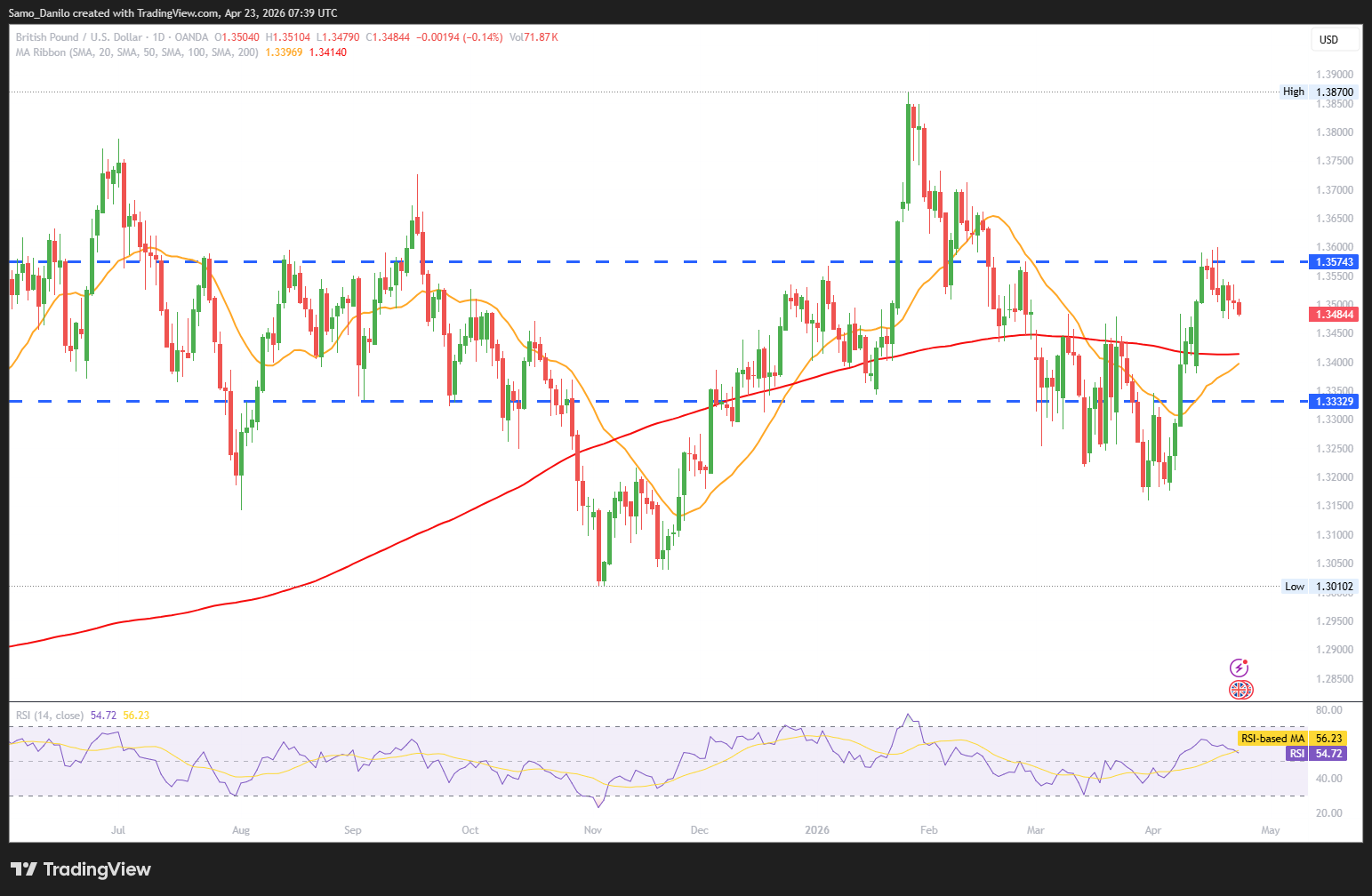
- GBP/USD Price: GBP/USD remains under pressure for a third consecutive session, trading around 1.3490. This indicates persistent bearish sentiment, with limited buying interest in the near term.
- BoE expectations: The Bank of England is expected to keep rates unchanged at 3.75% in the upcoming meeting. However, rising inflation is fueling speculation about future tightening or delayed rate cuts.
- UK fiscal position: Data from the Office for National Statistics showed government borrowing declined to £132bn for the fiscal year. This improvement suggests better fiscal management and could support long-term economic stability.
- Geopolitical uncertainty: US president, Donald Trump extended the Iran ceasefire temporarily, though skepticism remains due to limited progress in negotiations. Continued tensions around the Strait of Hormuz maintain uncertainty in global markets.
- Consumer confidence: A survey by Ipsos revealed that UK consumer optimism has fallen to its lowest level since records began in 1978. This reflects severe pressure on households due to rising energy prices and geopolitical tensions.
| SMA (20) | Slightly Rising | |
|
| RSI (14) | Falling |  | |
| MACD (12, 26, 9) | Rising | | |
Closing statement: GBP/USD remains under pressure as weak consumer sentiment and cautious BoE expectations weigh on the pound. The near-term outlook is bearish, with limited upside unless macroeconomic confidence improves and geopolitical risks ease.
XAUUSD
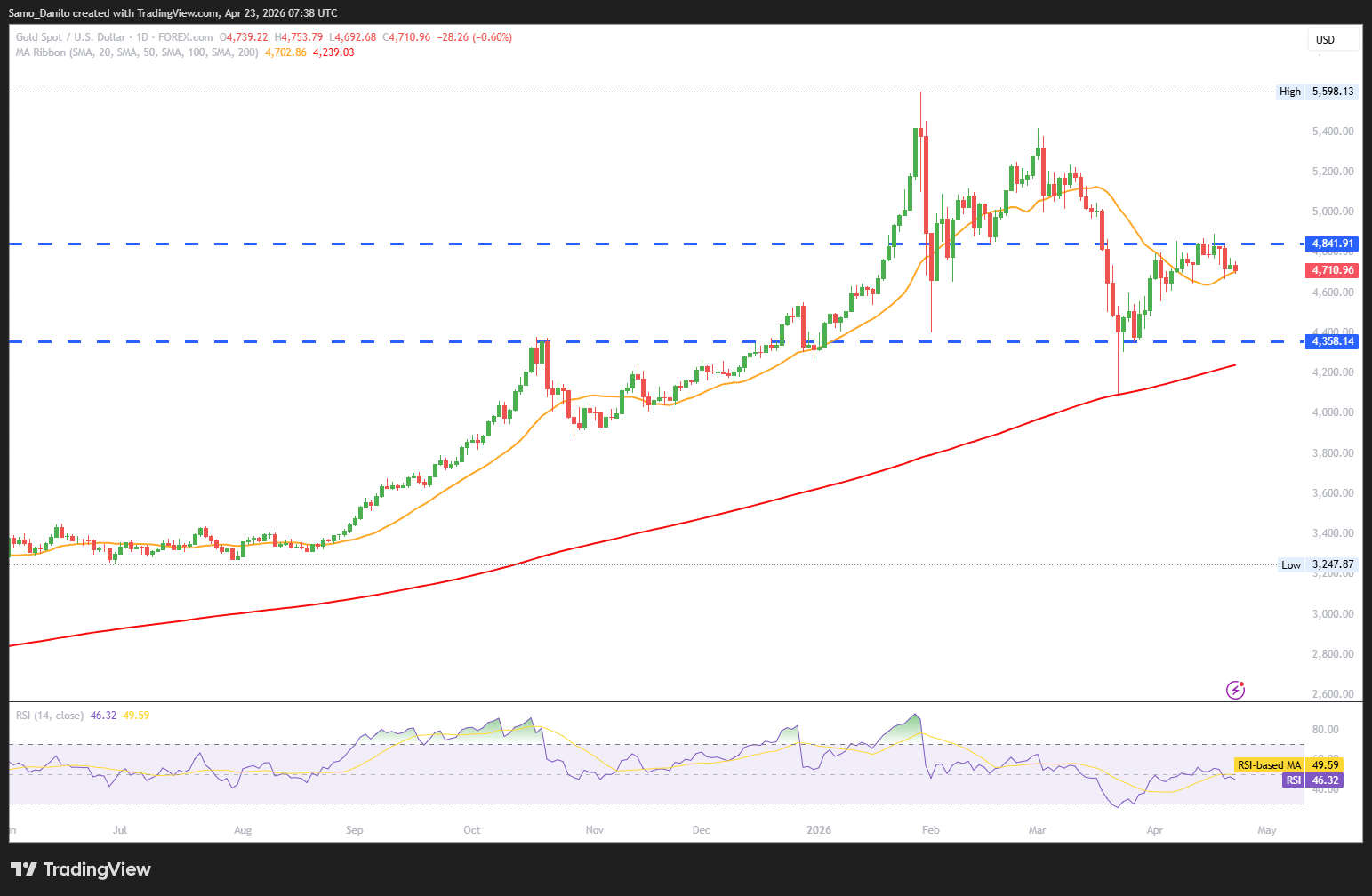
- XAU/USD Price: Gold continues to trade lower during the European session, holding below the $4,700 level. Despite the decline, it shows some resilience, suggesting buyers are still present at lower levels.
- Iran-US tensions: Reports from Iran indicate further military movements involving seized vessels, pointing to rising tensions. However, statements from Karoline Leavitt suggest the situation has not formally breached ceasefire terms.
- Tesla reported revenue growth of 16% year-over-year, but operating expenses surged significantly. This reflects broader trends of growth accompanied by rising cost pressures across industries.
- USD stronger: The US Dollar is gaining strength as higher energy prices fuel inflation concerns and reduce expectations for rate cuts. This creates a less favorable environment for gold, which typically moves inversely to the USD.
- Fed stance: A Reuters survey indicates that a majority of economists expect the Federal Reserve to hold rates steady through at least September. This reinforces expectations of a prolonged restrictive monetary policy environment.
| SMA (20) | Slightly Falling | |
| RSI (14) | Slightly Falling | |
| MACD (12, 26, 9) | Slightly Falling | |
Closing statement: Gold is under pressure from a stronger USD and reduced rate cut expectations, despite ongoing geopolitical risks. The near-term outlook is slightly bearish, with resilience likely to depend on shifts in monetary policy expectations or escalation in global tensions.
CRUDE OIL
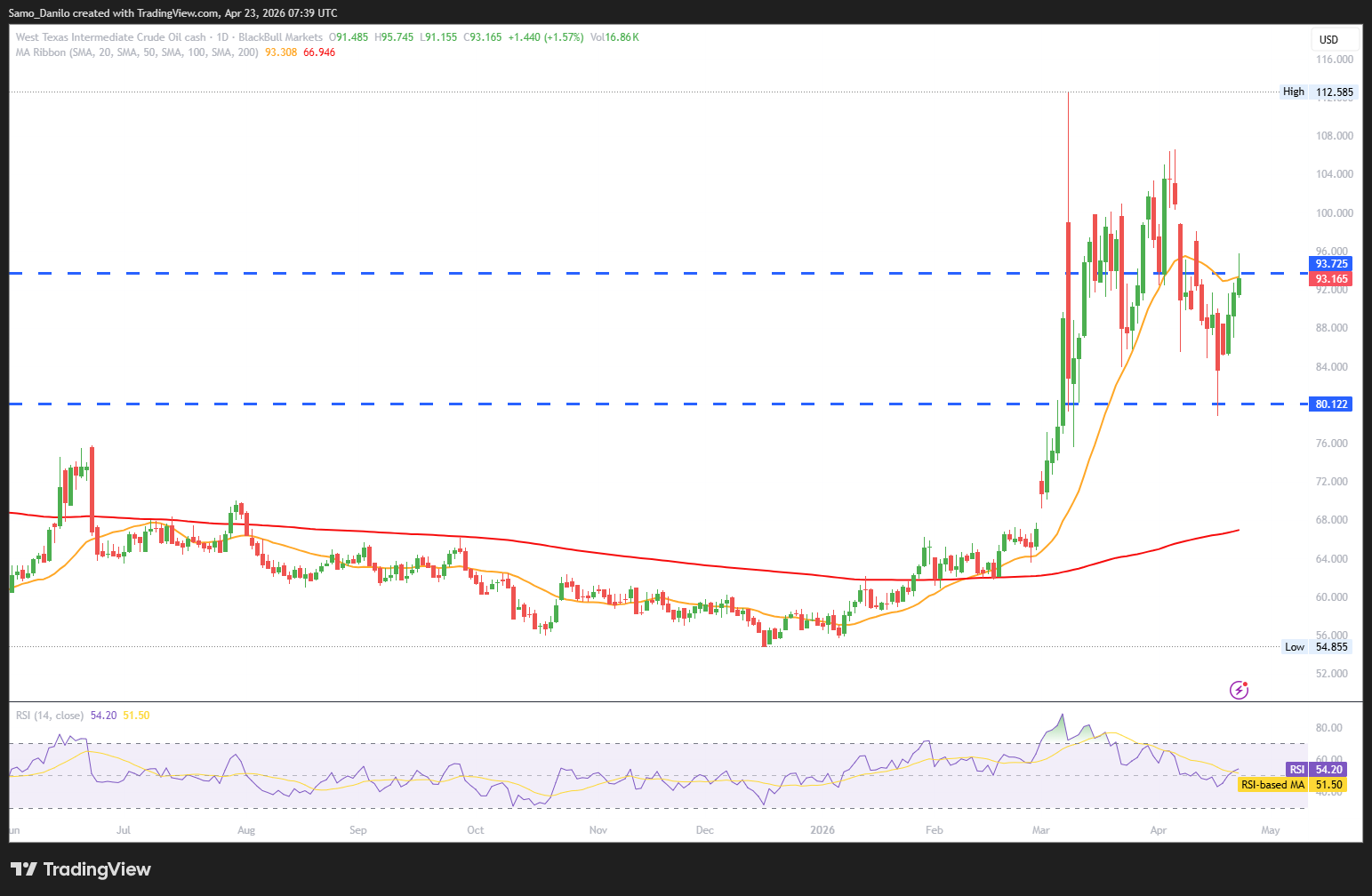
- Crude Oil Price: WTI crude is extending gains for a third consecutive session, trading around $93.20 per barrel. This continued upward movement reflects strong bullish momentum, driven by persistent supply concerns.
- Strait of Hormuz: Mohammad Bagher Ghalibaf, the speaker of the Iranian parliament and lead negotiator, said late on Wednesday that reopening the strait of Hormuz would be “impossible” while the US and Israel committed “flagrant” breaches of the ceasefire, including the US naval blockade.
- Maritime conflict: Iran has intensified its response by seizing additional vessels following earlier actions by the United States. This escalation increases the risk of further supply chain disruptions and market instability.
- Aviation sector: Lufthansa Group plans to cut 20,000 short-haul flights due to rising fuel costs and shortages. This highlights the broader economic impact of elevated oil prices on energy-intensive industries.
- Export boom: Brazil reported a record trade surplus, driven largely by a surge in crude oil exports. Strong demand, particularly from China, underscores tight global supply conditions.
| SMA (20) | Rising | | |
| RSI (14) | Slightly Rising | |
|
| MACD (12, 26, 9) | Slightly Rising | |
Closing statement: Crude oil remains in a strong bullish trend, fueled by escalating geopolitical tensions and supply disruptions. The outlook points to continued upside pressure, with prices likely to stay elevated unless there is a meaningful resolution in the Strait of Hormuz situation.
DAX
- DAX 40 Price: The DAX is heading for a fourth consecutive day of losses, trading around 24,140 points. This sustained decline indicates weakening sentiment, with sellers maintaining control in the short term.
- Composite PMI: Germany’s Composite PMI is expected to decline to 51.1 from 51.9, signaling continued expansion but at a slower pace. The slowdown across both manufacturing and services suggests moderating economic activity.
- EU Energy Measures: The European Commission introduced the “AccelerateEU” package to address rising energy costs. However, the absence of new funding reduces its immediate effectiveness, limiting support for markets in the near term.
- Debt levels: EU-wide data shows government debt at 81.7% of GDP with a deficit of –3.1%. These figures highlight ongoing fiscal pressures, which may constrain future policy flexibility and economic support.
- Auto sector: Volkswagen Group has lowered its long-term sales target in China, reflecting softer expectations in a critical market. This adjustment signals potential headwinds for one of Germany’s key industries.
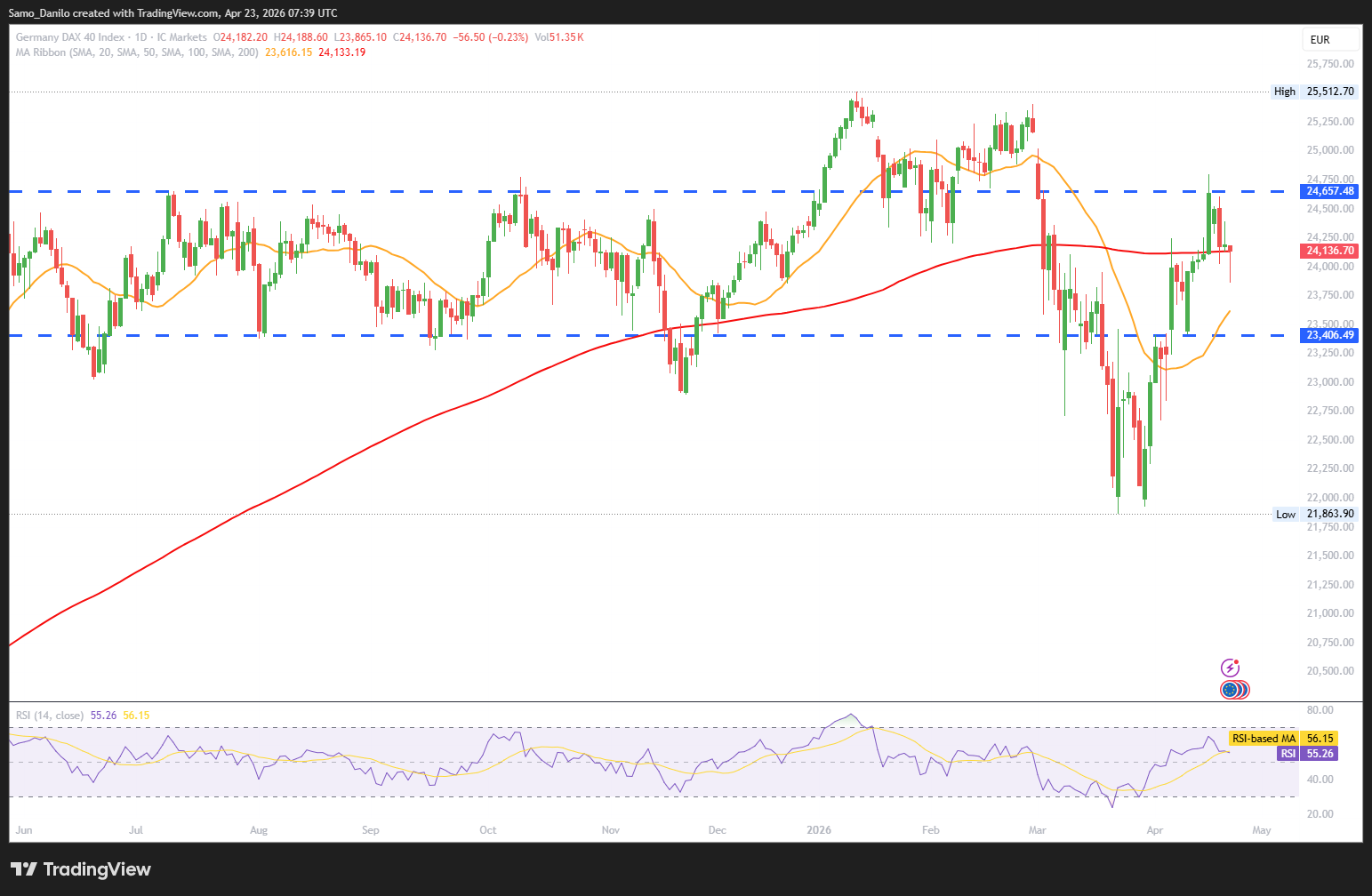
| SMA (20) | Rising | | |
| RSI (14) | Slightly Rising | |
|
| MACD (12, 26, 9) | Rising | | |
Closing statement: The DAX remains under pressure due to slowing economic momentum, limited policy support, and weaker corporate outlooks. The near-term bias is bearish, with recovery dependent on improved macro data and stronger policy responses.